
If you are already planning a trip through eastern Hokkaido, Abashiri Prison Museum offers a history stop with more substance than its ominous name suggests. Preserved prison buildings make the institution's layout tangible, while the history behind them connects punishment with the labour used to build roads in Hokkaido.
There is a practical catch for anyone arriving with a collection of old photographs: conservation work affects two prominent buildings. Our recommendation is to consider the museum for its wider history and architecture, then check the current closures before making one particular room the reason for your journey.
The museum and the working prison are different places
The museum's official FAQ makes this distinction explicitly. The current Abashiri Prison operates at another location. Visitors tour the museum's historic facilities, not the interior of the functioning correctional institution.
The same FAQ explains the prison's role in Hokkaido's development: inmates were forced to undertake road construction and other major work under harsh conditions. Give that context some time. A visit reduced to barred-door photographs misses the people and labour behind the buildings.
The museum estimates roughly one hour for a quick circuit and about two hours for a fuller visit. We would plan around the longer estimate, especially if reading the explanations is part of the attraction. Those are visiting estimates, not a promise that a bus connection or a late arrival will fit neatly around them.
Four cellblocks remain open; one is closed
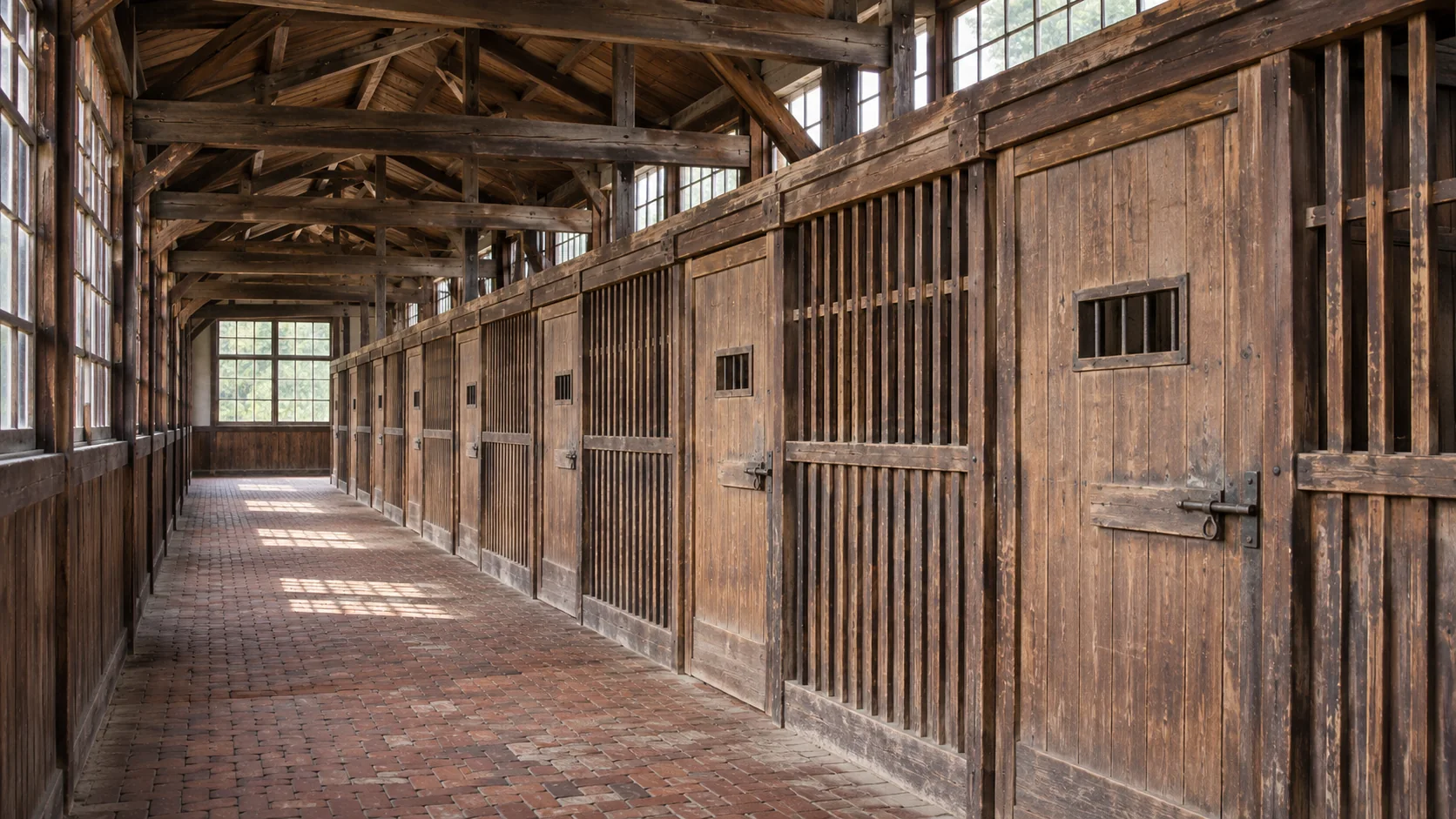
The Prison House and Central Guard House page describes five single-storey wooden wings extending from a central monitoring point. The surviving complex was built in 1912 and restored at its new location in 1985.
It is worth looking beyond the repetition of the doors. The museum explains how the timber lattice between cells and corridors was shaped to restrict views into the opposite cell. The central arrangement also allowed the connecting passages to be watched. These architectural details turn the space into evidence of how control was organised.
The current conservation notice says Cellblock 4 is closed for seismic strengthening and repair. Cellblocks 1, 2, 3 and 5 remain open. For the inaccessible wing, the museum provides VR, Matterport and QR-code explanations.
This is a partial closure, not a reason to describe the entire cellblock complex as unavailable. Equally, an older image of all five wings is not proof that you can enter all of them today.
The Lecture Hall is a different kind of closure
The museum's Lecture Hall notice says conservation work covers the whole building. Visitors cannot enter it, and the exterior cannot be viewed during the work period.
That matters if the hall's blend of Japanese and Western design was your main reason to visit. Arriving just for an exterior photograph would not solve the problem. Neither closure notice gives a reopening date in its English text, so we are not supplying one here.
If that building is essential to your plans, check with the museum before committing travel time. If your interest is broader, adjust the route and allow the conservation project to be part of your expectations rather than an unwelcome surprise.
Budget the visit, including the journey from town
The museum's current visitor information lists opening hours of 9 a.m. to 5 p.m., with last admission at 4 p.m. It closes on December 31 and January 1. Admission is ¥1,500 for adults, ¥1,000 for high-school students with student ID, and ¥750 for elementary and junior-high students; the listed prices include tax.
The site is on the Lake Abashiri side of Mount Tento, around four kilometres from JR Abashiri Station. Treat it as a separate journey from the station, not something you will happen across while changing trains.
For arrivals from Memanbetsu Airport, the museum advises taking the airport bus to JR Abashiri Station and transferring to a local bus. Its visitor page says there is no direct airport-to-museum bus. Check both legs before building a visit around a flight arrival.
Save the museum stop, not just “Abashiri Prison”
Abashiri Bus's sightseeing-route page lists both the prison stop and the prison museum on its route. For this visit, save 博物館網走監獄 / Abashiri Prison Museum. Do not choose 刑務所前 merely because the translated name mentions a prison.
The operator currently links a timetable covering October 1, 2026 to January 19, 2027, with a separate winter timetable for January 20 to March 31, 2027. Open the document covering your actual travel date rather than borrowing a departure time from a summer itinerary.
Work backwards from the return journey. Choose a service that leaves time inside the museum, then check how you will get back to your accommodation or onward connection. If a taxi is your backup, make that an actual arrangement rather than assuming a vehicle will be waiting outside.
A cold-weather visit still involves outdoor walking
The museum is an open-air site with movement between buildings. Its FAQ warns that weather can make some areas unavailable. An admission ticket should not be read as a guarantee that every part of the grounds will be accessible.
Check conditions, wear suitable footwear and leave flexibility in the plan. For anyone with limited walking tolerance, ask the museum about the usable route before booking around a two-hour circuit. Our recommendation is to prioritise the parts you most want to understand rather than trying to finish every building.
This is a worthwhile regional stop for travellers interested in institutional architecture and difficult history. It is a weaker choice if you want a wholly indoor bad-weather activity or one specific view of the closed Lecture Hall. Let that distinction decide whether it belongs in your Hokkaido trip.
Details checked November 25, 2026. Featured image: AI-generated historical-prison illustration, not a documentary photograph of Abashiri or its current visitor route.