
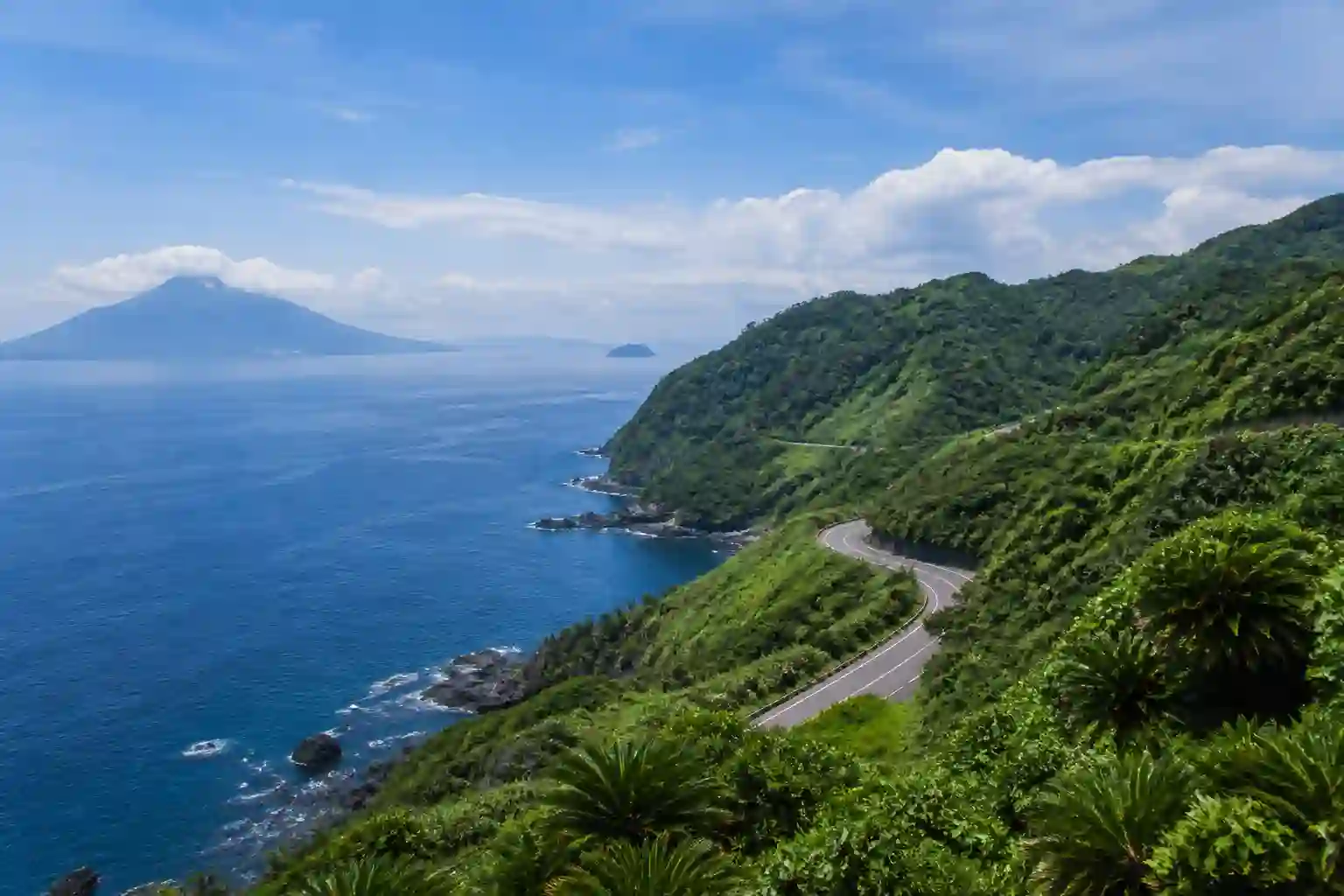
Japan’s Osumi Peninsula is the sort of place that makes a map look optimistic. It has a southern cape, subtropical coastlines, waterfalls, rose gardens and long views across Kinko Bay—but the attractions are spread across a large, rural peninsula in Kagoshima Prefecture. That is exactly why it is interesting, and exactly why it is not a casual half-day detour from Kagoshima City.
If you want a quieter, wilder corner of Kyushu, Osumi can be brilliant. If you want to improvise every transfer after lunch, it can become a very expensive lesson in Japanese geography.
What makes Osumi worth the effort
The peninsula feels different from the familiar Kyushu route of Fukuoka, Kumamoto and Kagoshima City. The official Kagoshima visitor guide describes a warm landscape shaped by the Kuroshio Current, with waterfalls, capes, flowers and shrines. The attractions are not one polished resort; they are a collection of places connected by roads, ferries and local communities.
Cape Sata is the headline. It is the southernmost point of mainland Japan, with a coastal observation area and views that can reach toward Tanegashima and Yakushima on a clear day. The cape also has a historic lighthouse designed by Scottish engineer Richard Henry Brunton in 1871. That combination—tropical-looking vegetation, open sea and a piece of early modern infrastructure—is more memorable than another crowded viewpoint in a major city.
Inland, Ogawa Falls gives the trip a completely different texture. The official tourism site describes an emerald-green basin and a trail from the parking area to the waterfall. It is a short outing on paper, but the final approach is sloped, so proper walking shoes are a better idea than smooth city sneakers.
Kagoshima’s official Osumi guide is a useful overview, while the official Ogawa Falls page has the current practical notes for the trail.
The important 2026 transport reality
Here is the detail that changes how you plan the peninsula: the sightseeing bus connecting Cape Sata and Ogawa Falls is currently suspended. Kagoshima’s official transport page says that, as of April 2026, there is no prospect of resumption. Older articles still describe the bus as the easy way to combine the two sights, so check the date before trusting a search result.
That does not make Osumi impossible. It means you should choose one of three honest approaches:
- Rent a car: the most flexible option for combining the cape, waterfall and smaller stops. Build in extra time for winding roads and do not assume every coastal road is fast.
- Use a ferry and local transport: the Nankyu Ferry connects Yamagawa on the Satsuma Peninsula with Nejime on Osumi. From there, you can arrange local taxis or accommodation-based transport, but confirm the final legs before you commit.
- Stay locally and slow down: choose Minamiosumi or another base on the peninsula, visit fewer places, and treat the trip as a rural stay rather than a checklist.
The official Cape Sata and Ogawa Falls transport notice is the page to check before booking. It is unusually helpful because it tells you what is not running.
A better two-day shape
Day one: cross the bay and settle in
Start with the ferry connection if that suits your route, then use the first day for a short coastal drive, a local meal and the view from your accommodation. The peninsula rewards arriving before you need something urgently. Shops and services are not arranged around an international tourist timetable, and a quiet evening is part of the appeal.
Day two: choose the landscape you actually want
Pick Cape Sata if you want the big horizon and the symbolic end-of-the-road feeling. Pick Ogawa Falls if you prefer forest, water and a short walk. Add both only if your transport is already secure. The temptation to cram them together is exactly how a remote destination starts feeling like a badly managed transfer day.
Panorama Park Nishiharadai is another official highlight, with a high observation deck looking across the area. It can work as a substitute for the cape if your route stays farther north, but check local access and weather on the day rather than treating every listed viewpoint as guaranteed.
What to pack—and what not to assume
- Bring water, sun protection and insect repellent, especially in warmer months.
- Wear shoes with grip for the waterfall approach and any damp or uneven path.
- Download maps before leaving stronger mobile coverage and keep a small cash reserve.
- Check ferry times, car-rental return rules and the last realistic taxi option before setting out.
- Do not assume a restaurant, fuel station or attraction will stay open late because it appears on a map.
- Leave space in the schedule for weather. Cape views can disappear into cloud, and a waterfall visit is less pleasant in heavy rain.
Who should skip Osumi?
Skip it for this trip if you have only one spare afternoon in Kagoshima, if you cannot drive and have not arranged local transfers, or if your priority is a dense run of museums and restaurants. Osumi is not a secret version of a city break. It is a rural road-and-sea journey where the spaces between attractions are part of the experience.
Go when you want a slower Kyushu story: a ferry wake, a forest trail, a lighthouse at the edge of the map and a night where the loudest thing may be insects outside your room. That is a worthwhile detour—but only when you plan it as one.
For more Japan trips that balance famous sights with places most itineraries skip, browse Japanify Tours’ experiences.
Bottom line: Osumi Peninsula is a superb lesser-known Kyushu destination, but the Cape Sata–Ogawa Falls sightseeing bus is suspended in 2026. Rent a car, arrange transfers or stay longer. Do that, and the peninsula’s remoteness becomes the reason to go rather than the reason you turn back.