
Oya, on the edge of Utsunomiya in Tochigi Prefecture, is worth considering if you want a day out built around something other than another shopping street or temple checklist. The main draw is Oya History Museum: an enormous former underground stone quarry. Pair it with Oya-ji's rock-carved Buddhist images and you have a compact theme for a day: what people have taken out of this landscape, and what they have left behind.
This is a suggestion for a Tokyo-based itinerary or a stay in Tochigi, not a sensible day trip from Kyoto. Nor is it a secret place that only locals know. Go because the subject interests you, not because somebody promised an empty attraction.
What is Oya History Museum, exactly?
Think industrial history, not a natural limestone cave. The official Japan Heritage description of the quarry traces extraction here to 1919 and puts the underground space at roughly 20,000 square metres. Those chambers are the result of removing building stone. The scale is the attraction, but the reason for that scale matters just as much.
Before going, try a small mental reset: stop looking for a picturesque building and start looking at the material itself. A block has edges; a quarry records where blocks used to be. That makes this a good detour for people who enjoy architecture but are tired of reading only about the architect. Someone had to produce the stone, too.
You do not need specialist knowledge to enjoy that idea. Equally, if a large excavated space sounds less interesting to you than a lively neighbourhood, believe your own reaction. There is no prize for adding an unusual stop you do not actually want.
Getting to Oya from Utsunomiya
Build the journey around Utsunomiya, then check the local bus in both directions before committing to a train home. From JR Utsunomiya Station's west exit, the museum directs visitors to stop 6 for the Oya–Tateiwa bus. Allow approximately 30 minutes to Shiryokan-iriguchi, then another five minutes on foot. These are route estimates, not a guarantee against traffic.
The useful planning question is not just “When can I get there?” It is “Which bus will I come back on if I stay longer?” Save a later return option as well as your preferred one. Booking the fastest possible rail connection while ignoring the last local leg is an excellent way to turn a relaxed outing into clock-watching.
There is also a bundled ticket. Kanto Bus currently lists its Oya sightseeing one-day pass at ¥2,200 for adults of high-school age and above. It combines unlimited travel on the designated JR Utsunomiya–Oya/Tateiwa bus section with admission to the museum and Oya-ji. Compare the bundle with what you will actually visit; do not buy it merely because it has “pass” in the name. Check the operator's linked leaflet and current sales information before travelling.
Do not stop at the quarry
Oya-ji gives the day a different use of the same landscape. At the temple, also written Ooyaji, the principal Kannon image is carved directly into rock. Nearby, the much larger Heiwa Kannon is a separate, 27-metre-high monument commemorating the Second World War dead and expressing a wish for peace. They are not two names for the same statue.
The temple currently lists adult admission at ¥500 and regular Thursday closure, with a public-holiday exception. Its calendar is worth checking separately from the museum's. Two places being close together does not mean they share opening days. Photography is permitted in the temple precincts, but not inside its buildings.
We would keep those visits as the core rather than turn the area into a ten-stop challenge. Leave space between them. Look at the stone around you, have a break, and return to Utsunomiya without trying to bolt on a second full sightseeing destination.
The practical details that older guides may get wrong
Use the museum's own visitor information for admission: the adult price became ¥1,000 in April 2026, and payment is cash only. Bring a layer; the operator specifically asks visitors to do so.
April–November hours are 9am–5pm, with final entry at 4:30pm. December–March hours shorten to 9:30am–4:30pm, with final entry at 4pm. Winter Tuesdays are normally closed, shifting to the next day when Tuesday is a public holiday; the published year-end closure is December 26–January 3. Temporary closures remain possible.
Do not assume step-free access. The museum does not admit wheelchairs or strollers on its usual route. It describes a separately charged, advance-booked golf-cart arrangement on eligible weekdays for visitors with walking difficulties; availability is restricted, so contact it before planning around that option.
Keep photography simple. The museum prohibits tripods, monopods and selfie sticks, and asks visitors not to stop for photographs on stairs, landings or narrow passages. A camera does not give anyone a private claim to the route.
A December change: the exhibition room, not the underground visit
One fresh detail deserves its own warning. In a notice published on October 20, 2026, the museum announced that its exhibition room would close for renovation from December. It explicitly says underground visits will continue as normal.
The notice discusses a hoped-for reopening the following spring, not a confirmed reopening date. If you are visiting in winter, check for a newer announcement. Reading the headline alone could leave you thinking the whole attraction is shutting; the actual notice makes a narrower distinction.
Who should put Oya on their itinerary?
Choose it if stonework, industrial spaces or a focused outing beyond central Tokyo appeal to you. Give it a miss if your priority is an easy, flexible day with no local-bus planning, or if access restrictions would make the visit impractical.
Our suggested shape is straightforward: travel to Utsunomiya, take the bus out, visit the quarry and temple, then head back. Adjust the order to the actual timetables and opening calendars. That is enough. A day does not become more interesting simply because you have squeezed more pins onto its map.
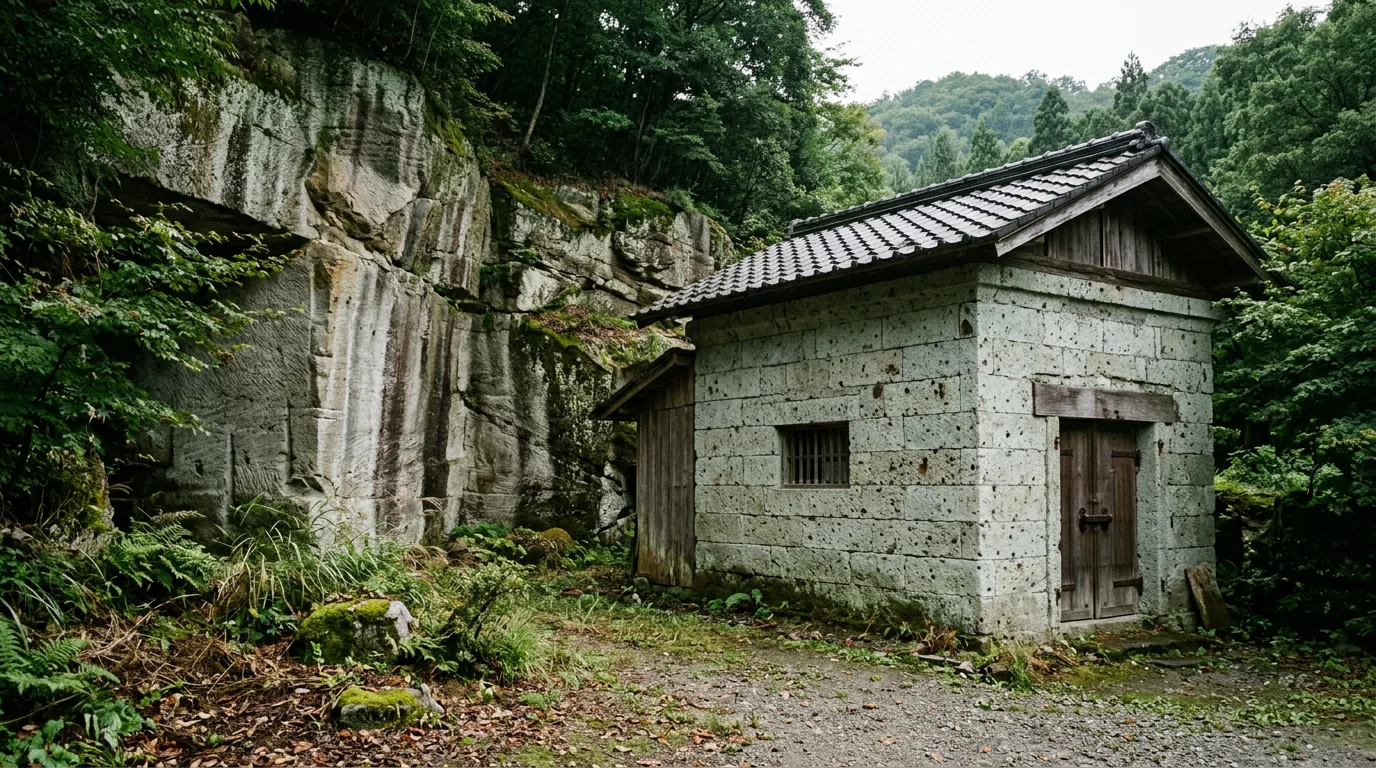
Practical information checked October 21, 2026. The featured image is an AI-generated illustration inspired by Oya stonework, not a photograph of the museum or a specific building.