
A nail clipper is an unlikely reason to rearrange a travel day. In Tsubame-Sanjo, Niigata, it can be a good one: seeing an everyday object being made gives you something a shop display cannot show. Pair that with a copperware workshop and you have a day built around process, rather than another sweep through souvenir shelves.
Two places offer a useful contrast: SUWADA in Sanjo and Gyokusendo in Tsubame. Plan around the working hours, confirm the transfers, and leave time to look. These are operating workplaces with visitor arrangements, not a single attraction with one shared ticket or timetable.
What an open factory actually offers
Sanjo City's official open-factory guide describes manufacturing sites that admit the public to see production or try products. Its listings also show why “open factory” does not mean one uniform experience: some businesses welcome casual visitors, while others require a factory-tour reservation.
For this outing, the point is to understand two objects and two ways of working. You do not need to collect every maker in the district. A visit that leaves you noticing a tool's finish or a vessel's surface is more interesting than five hurried shop entrances.
SUWADA: arrange the day around production, not shopping
SUWADA is known for its nail nippers. Its official factory-visit page describes in-house work from material selection and forging through finishing, with visitors using designated viewing passages.
The published factory-viewing hours are 10:10 a.m. to 12:10 p.m. and 1 p.m. to 5 p.m., Tuesday through Saturday, with a further break from 3 p.m. to 3:10 p.m. Factory viewing is closed on Mondays, Sundays and public holidays, as well as during the New Year closure; temporary changes are possible.
Ordinary visitors do not need a reservation. Groups of ten or more are asked to contact the company beforehand. The shop has a separate schedule, so a shop-opening notice is not enough to establish that production viewing is available.
The company warns that particular machines or processes may not be running and that work can change or stop without notice. Treat the visit as a chance to observe that day's production rather than expect a demonstration of every stage on demand.
Our suggestion is to look for the relationship between a small finished object and the number of operations behind it. You do not need technical expertise to notice repeated checking, surface differences or how carefully parts are handled.
Gyokusendo: watch the copper, then hold the finished piece
Gyokusendo's official English open-factory information gives set tour starts at 10 a.m., 11 a.m., 1 p.m., 2 p.m. and 3:10 p.m. It asks groups larger than five to book ahead and advises calling to check availability because scheduled tours can be cancelled.
The listed closures include Sundays, statutory holidays, New Year and summer holidays. When open on Saturdays or holidays, only a small number of artisans may be working. Its English page lists ordinary visits as free, with charges for some institutional and trade bookings; larger parties should confirm both arrangements and fees directly.
After the workshop tour, visitors are invited into a tatami room to handle finished copperware. That is a useful second half of the experience: first see the work, then feel the result. Let the staff direct what you may handle, rather than touch workshop equipment.
A little preparation makes the hammering more interesting
Gyokusendo's explanation of its tools and techniques is worth reading beforehand. Copper becomes harder as it is worked, so shaping alternates with heating that restores its malleability. Different hammers and anvil stakes serve different stages, and finishing includes work on texture and colour.
That gives you a few concrete things to look for without trying to become a metalsmith overnight. Watch how a curved surface is supported, how the tool changes, and how the partially formed vessel differs from the finished object you later hold.
Ask questions when staff invite them, but let the work set the pace. A visitor route through production is different from a hands-on workshop. Neither visit described here should be treated as a booking to make your own nail clipper or copper vessel.
Build the route before booking the rest of the day
The addresses matter. SUWADA is at 1332 Koanji in Sanjo; the regional industrial-tourism directory places Gyokusendo at 2-2-21 Chuo-dori in Tsubame. Put the actual destinations into your route planner rather than assume the shared Tsubame-Sanjo name means they are adjoining stops.
Choose the Gyokusendo tour you want, then check whether your outward journey and onward connection leave a comfortable margin. Fit SUWADA into a production-viewing window without arriving during lunch. Tuesday to Friday is a sensible starting point under the regular schedules, but holidays and individual closure notices still need checking.
If you are using public transport, establish the whole journey to each door and back, not simply the rail leg into the region. If you plan to use taxis, ask about availability and the return pickup. We would make one confirmed factory visit the anchor and keep the second conditional until those transfers work.
The camera rules differ, too
SUWADA permits factory photographs but asks visitors not to use flash. Gyokusendo asks you to seek permission before photographing and prohibits video and flash. Follow the instructions at each site; permission at the first factory does not carry over to the next.
The visit details above were checked on 18 November 2026. Recheck the companies' pages and contact them for your date, especially for groups or special assistance. Choose this outing if the making is what interests you. If you only want to buy a finished object, a shop visit may suit your itinerary better.
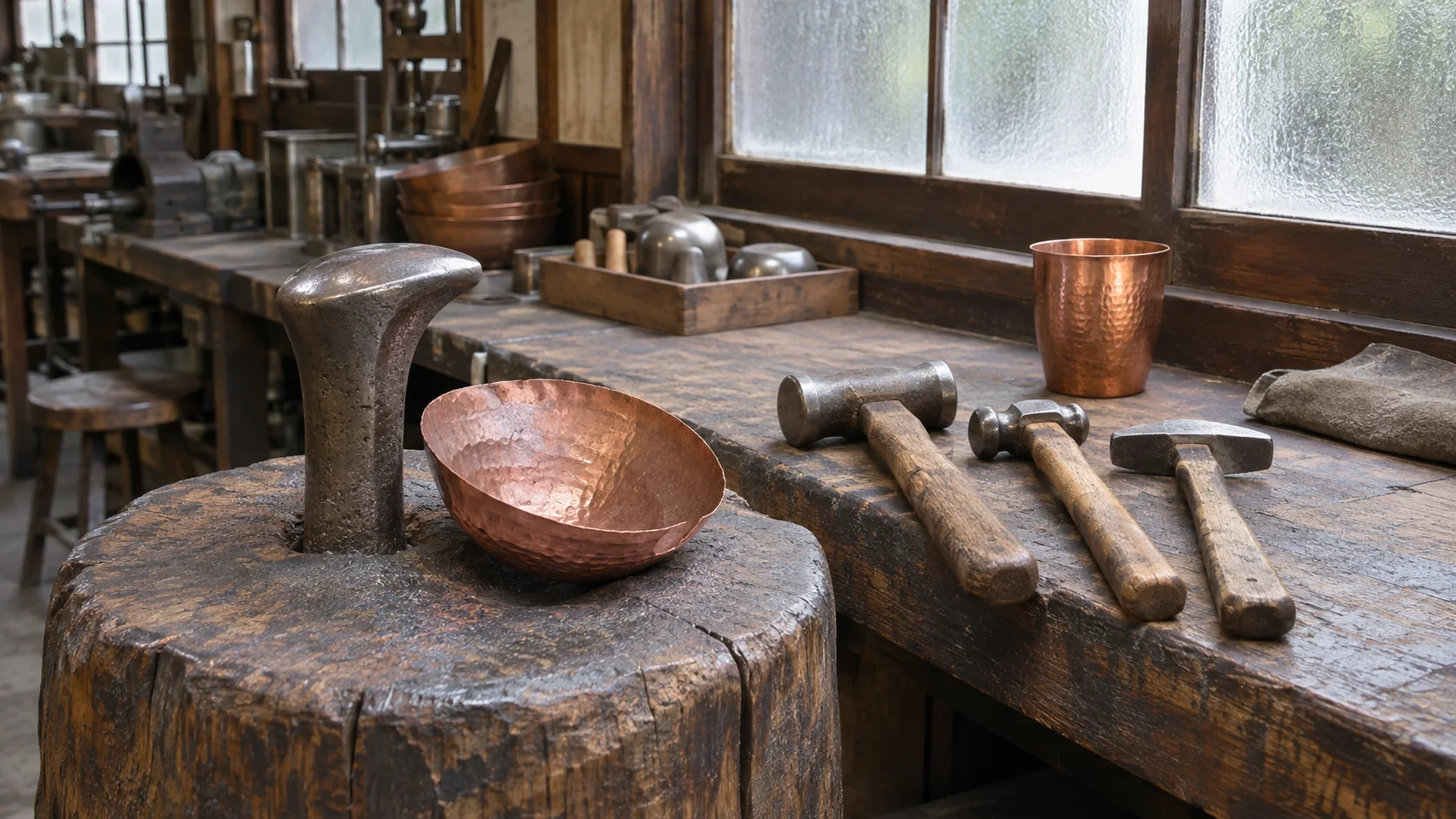
Featured image: an AI-generated metalworking illustration inspired by Niigata workshops, not a photograph of SUWADA or Gyokusendo.