
If you come to Uchiko for the theatre, check the small print: the main hall is closed for restoration. If you come to see how a rather ordinary product paid for an extraordinary street, you still have a good reason to get off the train. In this part of Ehime, that product was wax.
Make the Japanese Wax Museum and Kamihaga Residence the anchor of a half-day from Matsuyama. Walk the Yokaichi–Gokoku district, leave time for the workshop if it is open, and treat the theatre’s backstage exhibit as a separate stop. No car is necessary for this route if you are comfortable walking between the station and the old town.
Start at the wax works, then look at the houses
A street of old merchant houses can be lovely without telling you much. Start inside the Kamihaga Residence and Japanese Wax Museum and you have something to look for when you come back out. The house belonged to a branch of a prominent wax-producing family. On the same property are buildings where production took place, including a boiler house. You can see the domestic and industrial sides of the business without having to imagine them in two separate parts of town.
The exhibition uses models, tools and video to explain how Japanese wood wax was made. Give that room a little time before you move on to the house. A production display is not usually the bit people put on a postcard, but it answers the question the rooms alone can’t: what did this household actually do for a living?
The museum’s published hours are 9:00–16:30, with a year-end closure from December 29 through January 2. Its listed admission is ¥500 for adults and ¥250 for children aged 6–15. If you are choosing just one paid stop, this is the one I’d put first. Check the museum’s current notice before you travel, especially if your train gets in late.
Read the street as a place where people still live
Outside, take the Yokaichi–Gokoku preservation district at walking pace. The Japan National Tourism Organization connects the district’s houses with trades including wax, paper and raw silk. Wax gives you a way into the story, but it wasn’t the only thing that made the town prosperous.
Look at the proportions of the street-facing buildings, the timber and plaster, and how much of the property you can’t see from the road. The museum visit makes that last detail interesting: there can be a whole working layout behind an apparently simple frontage. Don’t mistake that curiosity for permission to follow it through a gate. This is an inhabited district. Look from the street unless a building clearly welcomes visitors, and step aside if you stop to take a photo.
A candle shop is a good second stop, not a guaranteed demonstration
At the Ōmori Japanese Candle Maker, the local tourism office describes wax from the fruit of the haze tree being applied around a wick in successive layers. The rings you can see in a cut candle are a trace of that work. It is a satisfying detail to notice after the museum, even if nobody happens to be making candles when you arrive.
The workshop listing gives 9:00–12:00 and 13:00–17:00 as its usual opening windows and lists Tuesdays and Fridays as regular closing days. The viewing window is a chance to see work in progress, not a performance with a guaranteed start time. If you are arriving at noon, use the break for lunch instead of counting on the door being open.
What you can actually see at Uchiko-za
Uchiko’s official theatre page says the main building closed in September 2024 for conservation and earthquake reinforcement. The dressing rooms behind it have a separate visitor exhibit with displays and video about the theatre. That can make a worthwhile short stop, but it is not a tour of the auditorium, stage or box seating. Check the current notice if the theatre is the main reason for your visit; don’t build your itinerary around an old photograph of the interior.
Getting to Uchiko from Matsuyama by train
From JR Matsuyama Station, look for a Uwakai limited express that stops at Uchiko. The tourism board puts the walk from Uchiko Station to the preservation district at about 20 minutes. Allow longer if you’re carrying luggage, stopping for photos or heading all the way to the museum. JR Shikoku’s station directory links the departure timetables and lists lockers at Uchiko; it does not tell you whether a locker will be free when you arrive.
Save a return departure and a backup before leaving Matsuyama. If the first one would make you rush the museum or cut lunch short, use the backup as your plan from the start. In rain, make the museum the priority and shorten the street walk. If walking the full route is a concern, ask the sites directly about entrances and arrange the station transfer before you go.
Uchiko works best as a few unhurried hours with one question in mind: how did making wax shape this town? If what you really want is to sit inside the historic theatre, save that visit for after the restoration. There is no need to force both trips into the same afternoon.
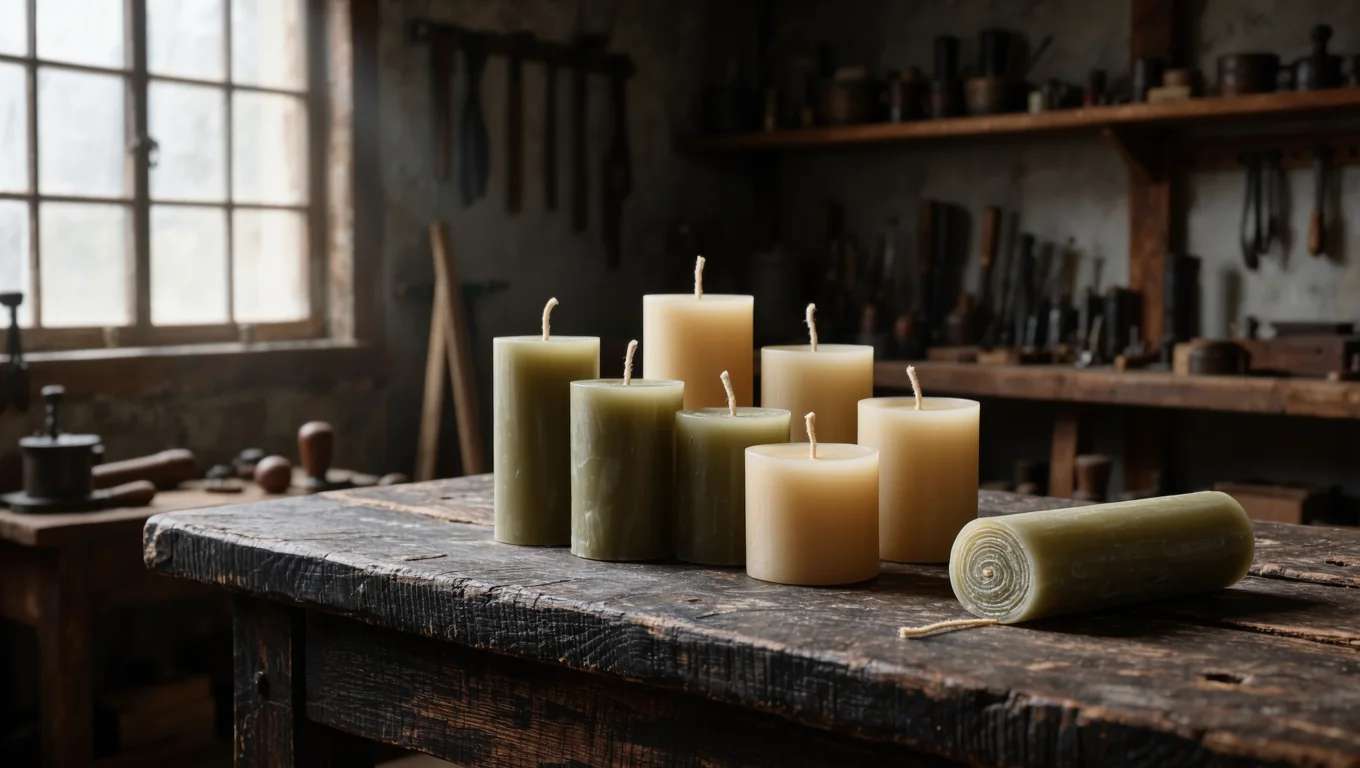
Visitor details checked November 4, 2026. The featured image is a generated illustration of traditional candle-making materials, not a photograph of the Ōmori workshop.