
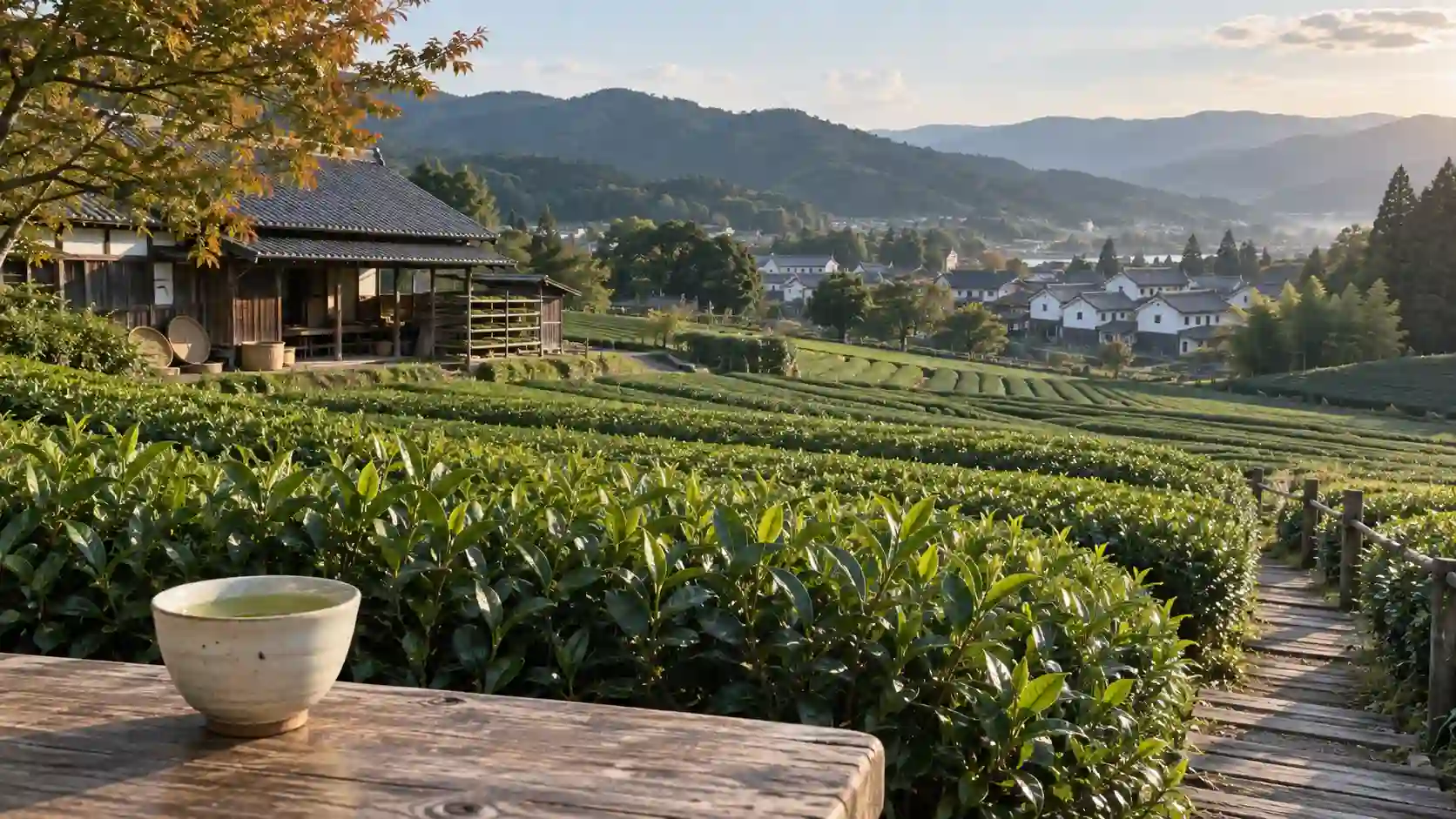
Short version: Yame is not a place to race through for one tea-field photo. In southern Fukuoka, the day works best as a slow loop through a preserved merchant town, a tea tasting, one hands-on craft and, if the transport lines up, a drive into the green hills of Oku-Yame.
That makes Yame a useful answer to a familiar Japan-trip problem: you want something with a real local identity, but you do not want to replace one famous checklist with another. The town’s appeal is not a single blockbuster sight. It is the way tea, old houses, paper, lanterns, food and working artisans still sit in the same landscape.
Why Yame works as a detour
Yame City is about 50 kilometres south of Fukuoka City. Its central area is easygoing and built-up; the northeast stretches into forest and mountain country. The official Visit Yame access guide describes a place with both flat urban areas and wooded Oku-Yame, which is why a little planning matters. You can make a pleasant town day without a car, but the famous tea landscapes and mountain workshops are spread out.
Yame is also more specific than the generic label “tea town” suggests. The city’s own tourism site highlights handmade washi, Buddhist altars, paper lanterns and local produce alongside tea. You are not just looking at an agricultural view; you are seeing the materials and trades that grew around the same water, forests and merchant routes.
Start in Yame Fukushima’s old merchant streets
Begin in the Fukushima district, where white-walled buildings and former merchant houses give the centre its texture. The best approach is deliberately unhurried: walk a short stretch, look through open shopfronts, then stop for tea rather than trying to “cover” every lane. Some houses are businesses, some are homes and some are accommodation, so the quiet is part of the experience. Keep voices low and do not treat a private doorway as a photo set.
The Yame Tourist Information Center and the adjoining Tokimeki local-products centre are useful first stops. They can help you check what is open that day, find current workshops and pick up tea, sweets or local sake without guessing which shops are operating. The official site lists Yamecha from multiple producers, along with regional foods such as mugwort sweets and tea-flavoured desserts.
Drink Yamecha with a little context
Yame tea has a story worth hearing before you buy a bag. The official Fukuoka travel guide says the local tradition traces its beginnings to 1423, when the Zen priest Eirin Shuzui is said to have brought tea seeds back from Ming China. That is a local origin story, not a reason to pretend every cup tastes the same. Ask what you are drinking: sencha, kabusecha and gyokuro have different cultivation and brewing styles.
Gyokuro is the name visitors will encounter most often, and Yame is particularly associated with high-grade gyokuro. A good tasting is less about finding a single “best” tea than noticing how temperature, steeping time and leaf shape change the cup. If you normally add sugar or milk, try one small serving plain first. The sweetness and umami can be surprisingly soft when the water is not boiling.
For a deeper look, the official Visit Fukuoka guide to Yame tea explains the local history, tea varieties and the limited spring picking season. Tea-picking dates, producer visits and café hours change, so check the current listing rather than planning around an old social-media post.
Choose one craft instead of collecting ten souvenirs
Yame becomes memorable when you make something or watch someone work. The local tourism office’s current craft and experience listings include tea tastings, paper-cut workshops, lacquer and gold-leaf work, Buddhist sculpture, knife-making and other programs. They are not all drop-in activities. Some require advance registration, transport to an atelier or a Japanese-speaking host, and seasonal programs may fill by lottery.
Pick one experience that matches the time you actually have. A short tea session fits a day trip. A workshop in the hills may justify an overnight stay. If you cannot reserve anything, the town is still worthwhile: buy one well-made item from a working shop, ask what material it uses and leave enough time for the conversation. That is a better souvenir than a rushed armful of anonymous “Japanese” goods.
Make the tea fields a planned second act
The Yame Central Tea Plantation is the image most people see when they search the area: rows of tea on rolling slopes with a wide view. JNTO’s Yame Central Tea Plantation guide gives a useful reality check. From Hakata, it lists a 24-minute JR Kyushu Shinkansen ride to Chikugo-Funagoya followed by a roughly 30-minute taxi ride to the plantation.
That is a straightforward route for a single viewpoint, but it is not the same as having a frequent shuttle between every tea farm. If you want to combine the plantation with Oku-Yame cafés or a workshop, ask the tourist information centre to help you join the dots, or hire a car for the day. Do not promise yourself a spontaneous mountain loop and then discover the last return bus has already gone.
Stay overnight if you want the town after the day-trippers
Yame can be visited from Fukuoka, but an overnight stay changes the rhythm. The official accommodation list includes Craft Inn Te, a renovated old house furnished with work by Kyushu artisans, and NIPPONIA HOTEL YAME FUKUSHIMA MERCHANT TOWN, which uses restored buildings connected to the area’s tea and brewing history. These are not interchangeable with a standard city hotel: room counts are small, staffing can be limited and meals may be arranged separately.
If you stay, use the extra time for breakfast, an early walk through the quiet streets and a second tea stop. If you are sleeping back in Fukuoka, leave the mountains for another trip and focus on Fukushima’s townscape, one tasting and one craft shop. That is enough for a satisfying day.
Who should skip Yame?
Skip it if you need a dense run of major attractions, late-night entertainment or guaranteed English service at every stop. Yame is not a substitute for Fukuoka’s food stalls, and it is not a theme park version of rural Japan. Shops keep local hours, the most interesting places are dispersed and some of the best experiences involve a reservation.
Go if you enjoy learning why a place looks the way it does. Tea here connects to water, mountains, ceramics, sweets, timber, paper and hospitality. That chain is the destination.
A realistic one-day plan
- Morning: arrive in Fukushima, collect a current map and walk the old merchant streets before the day warms up.
- Late morning: take a proper Yamecha tasting or tea-and-sweets break; buy only what you can carry home.
- Afternoon: do one booked craft experience, or visit a workshop and ask permission before photographing the work.
- Late afternoon: add the Central Tea Plantation only if your taxi or car plan is confirmed. Otherwise, keep the extra hour for the town.
- Before leaving: check the last train or bus and return purchases to your accommodation rather than dragging them through a crowded connection.
Yame is the kind of detour that gets better when you remove two items from the itinerary. For more honest alternatives to the standard route, browse the Japan Beyond the Guidebook archive. Save Yame for the trip when you want to taste a place slowly, not merely prove that you reached it.