
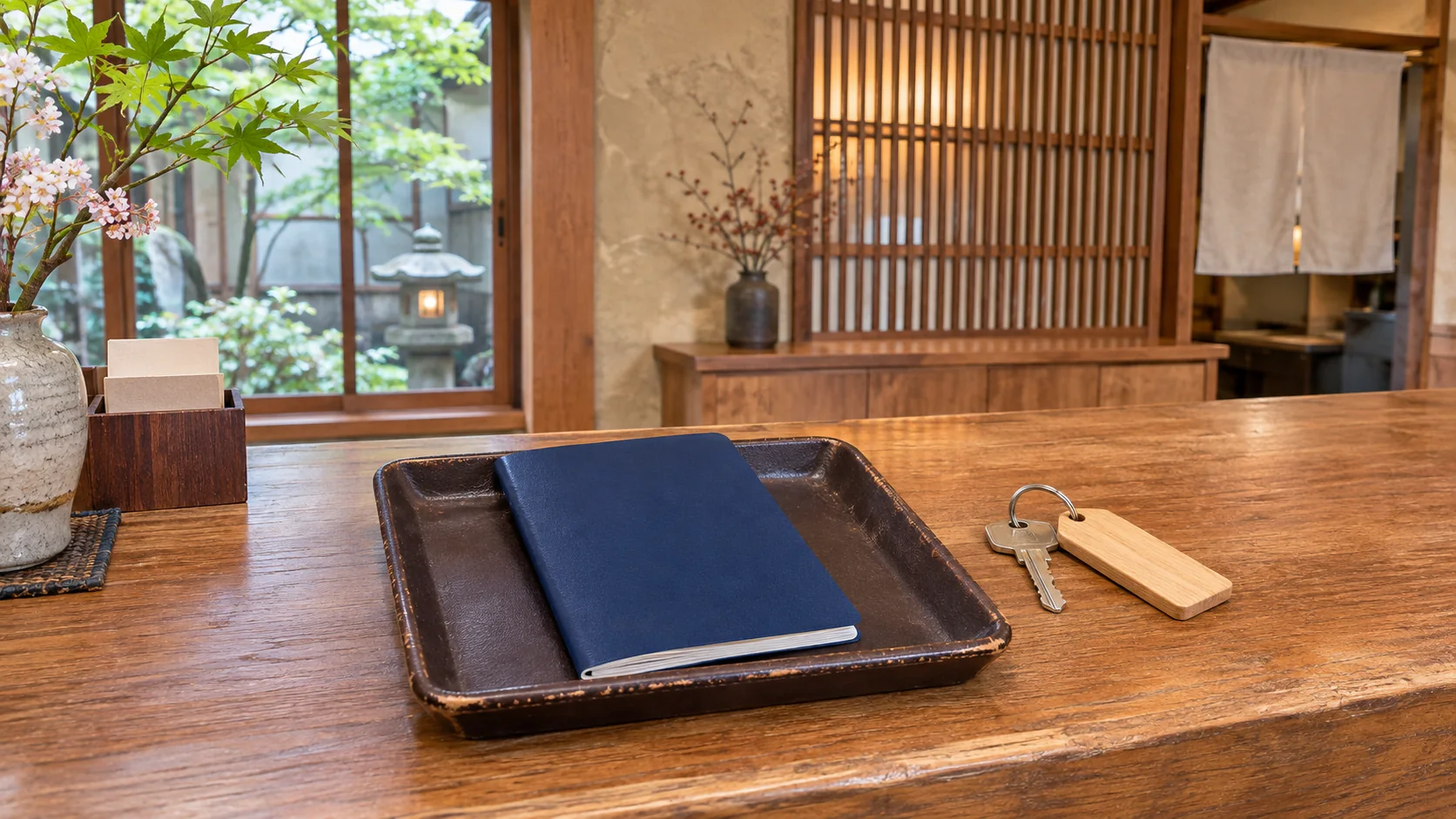
You arrive at a hotel in Japan, give your booking name and reach for your passport. The receptionist asks to copy it. For an overseas visitor, that request has a clear government basis. But the internet shorthand that “every foreigner must show a passport at every Japanese hotel” leaves out a significant detail: whether the guest has an address in Japan.
The useful answer depends on your circumstances, rather than your appearance, accent or which language you use at the desk. Here is what to prepare, and what to ask if a request does not seem to fit.
Overseas visitors should expect a passport check
The Ministry of Health, Labour and Welfare's multilingual notice for guests specifies foreign nationals who do not have an address in Japan. Alongside the usual guest-register information, including name, address and contact details, their nationality and passport number must be recorded. The government also requests presentation and copying of the passport.
If you live abroad and are visiting Japan on holiday, prepare for this at check-in. A booking confirmation and a passport do different jobs; having the first ready does not make the second unnecessary.
Ask how the check works if you are unsure. Showing an original, allowing a copy and leaving a document behind are separate actions. Our practical recommendation is to get your original back once the check is complete, and clarify any request to retain it rather than assuming that is part of the copying process.
A shared booking does not mean one guest's details will do
The National Consumer Affairs Center of Japan's English answer about hotel passport copies explains that hotels must record the nationality and passport number of all staying foreign guests who do not reside in Japan. For an ordinary family or individual booking, expect each relevant guest's details to be needed.
This matters when one person manages the whole trip. Keep everyone's documents accessible rather than packing the others into a suitcase being forwarded elsewhere. Do not assume the person whose name appears on the reservation has completed every other guest's check-in requirements.
It is also worth reading the property's instructions before arrival. If they ask you to complete something in advance, clarify what remains to be done at the desk. Avoid promising your companions an instant key collection based only on having paid online.
Foreign residents are a different case
A foreign national with an address in Japan does not fall into the category described in the ministry's passport notice. Do not turn a nationality-based assumption into the rule.
The ministry's Hotel Business Act FAQ, revised June 12, 2026, addresses residence cards directly. In the final question of its “Other matters” section, it says that presentation or copying may be requested when considered necessary by local authorities and others, but there is no basis in the legislation to compel it if a resident guest refuses.
That distinction should not be stretched into a claim that every identity check is forbidden. If you live in Japan, explain that you are a resident and provide your actual address. Ask whether the staff are applying the rule for guests without a Japanese address or making a different request, and on what basis.
If the answer remains unclear, ask a manager to check the guidance. For an unresolved individual dispute, seek advice from the local authority responsible for the accommodation rather than relying on a social-media argument.
An electronic check can still be a real check
A passport request is not automatically suspicious because it involves a machine or an electronic copy. The ministry's management guidance updated in January 2026 includes electronic storage of passport copies through automated check-in equipment and similar systems. It also describes identity-verification arrangements using technology.
That is a reason to understand the process, not a reason to trust every upload link. As a privacy precaution, verify an unexpected request through a contact route you already know belongs to the property, such as your confirmed booking or its official website. Ask what information is needed, where to submit it and whether another check-in method is available if the system fails.
Do this before travel day if possible. Do not send the same identity document through several unfamiliar channels just because the first upload appeared not to work. A genuine accommodation requirement and a trustworthy submission route are two separate questions.
The hotel's copy does not replace your original
For overseas visitors, JNTO's local-laws guidance says to carry your passport with you at all times as identification. Having let the hotel copy it does not make the hotel your document-storage plan.
Keep the original secure and accessible. A photo on your phone is useful as a backup record, but do not plan your hotel arrival around an assumption that a screen image will replace presentation of the passport. If the original is lost, contact your accommodation and your embassy or consulate for instructions rather than inventing a substitute.
What to have ready
- Your reservation details and the property's check-in instructions.
- The original passports of overseas visitors in your party, accessible rather than buried in forwarded luggage.
- Accurate home-address and contact information, with your resident status explained if you live in Japan.
For a straightforward holiday stay, our recommendation is simple: expect the passport check and leave a few minutes for it. If you are a Japan resident, explain that distinction calmly. And if someone sends an unexpected upload request, verify the channel before sharing an identity document.
Checked November 23, 2026. This is general travel guidance, not advice on an individual legal dispute. Featured image: AI-generated illustration of a Japanese inn reception, not a named property or a real identity document.