
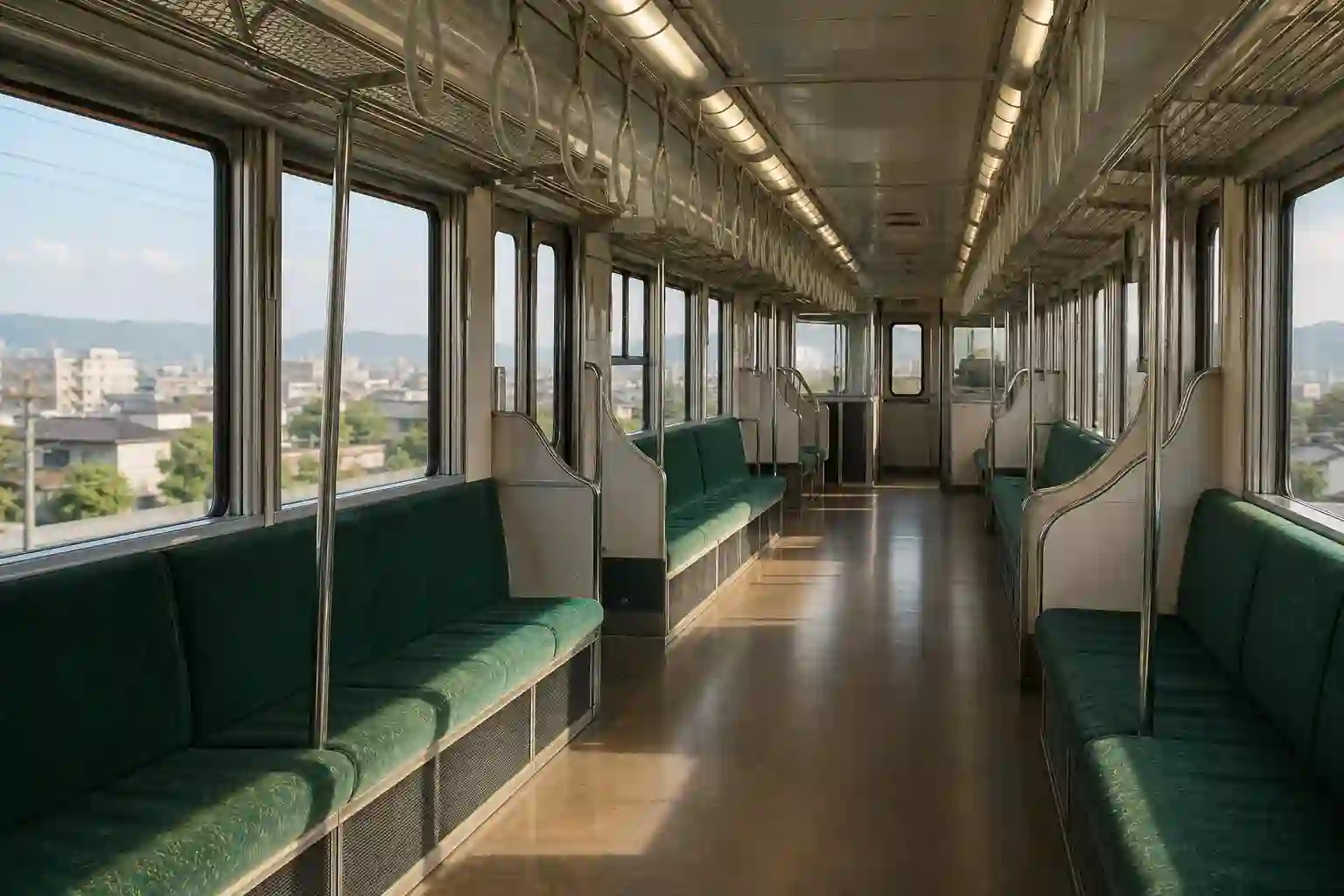
“You are not allowed to talk on a Japanese train.” It is a sentence that appears in travel videos, etiquette lists and anxious first-trip itineraries. It is also too blunt to be useful.
The real expectation is narrower: keep your voice low, avoid phone conversations in the carriage, and pay attention to the people sharing the space. Quiet conversation is generally acceptable. A short call in the corridor of a long-distance train can be fine. A loud video meeting on a crowded commuter service is the kind of behaviour that will make everyone around you wish the doors opened sooner.
This is a good example of how Japanese travel etiquette gets flattened into fake universal laws. The point is not silence at all costs. The point is not making a shared, enclosed space harder for other people.
What the official guidance actually says
The Japan National Tourism Organization’s manners guide says that speaking in soft voices on trains is acceptable, while talking on the phone at any volume is generally frowned upon on trains and buses. Its train-and-bus guide makes the same distinction and notes an important exception: on a long-distance train such as the Shinkansen, phone calls can be made in the corridor between cars.
That is different from “talking is banned.” You can speak to the person beside you. You can ask a question. You can laugh at something your friend says. You can have a normal human conversation, provided you are not broadcasting it through the carriage.
Why phone calls feel different
A phone call is one-sided noise. The person nearby hears your half of a conversation without any of the visual cues that make an in-person exchange easier to ignore. On a quiet train, even a moderate voice can travel surprisingly far. Add a speakerphone, a video clip or a string of work calls, and the sound becomes everyone else’s problem.
Japanese public transport etiquette is built around reducing that friction. Trains carry people who are commuting, resting, studying, caring for children or simply trying to get through a long day. A low voice lets all of those people share the same carriage without negotiating with one another.
The practical rule by train type
Commuter trains and city subways
Put your phone on silent or vibrate, avoid calls inside the carriage and keep videos or music on headphones at a volume only you can hear. If you need to speak urgently, get off at the next station and call from the platform or concourse where it is allowed. This is especially considerate during crowded morning and evening periods.
Local and sightseeing trains
A less crowded local train may feel relaxed, but the same basic courtesy applies. Quiet conversation is fine; a loud call is not suddenly charming because the view is rural. Some sightseeing trains have their own atmosphere or announcements, so follow signs and staff instructions.
Shinkansen and other long-distance services
Long-distance trains are not silent retreats. People talk, eat, work and sometimes travel in groups. The sensible place for a phone call is the vestibule or corridor between cars, not your seat. Keep it brief and return to your seat when you are done. JNTO specifically identifies this corridor practice as acceptable on long-distance trains.
Station platforms and buses
Platforms are not automatically quiet zones, but do not stop in the flow of passengers to take a call. On buses, space is tighter and the engine does not hide voices as much as you might expect. Keep calls short or wait until you get off, especially on a city bus where people are boarding and leaving continuously.
Other small habits that matter more than a perfect bow
- Let people exit first. Stand to the side of the doors and allow passengers off before boarding.
- Manage your backpack. Take it off in a crowded carriage and hold it low or use a luggage rack so it does not hit someone.
- Keep priority seats available. Give them to older passengers, pregnant people and riders with disabilities when appropriate.
- Do not turn the aisle into your office. If you have luggage, keep it compact and out of the way.
- Use headphones responsibly. Noise leaking from headphones is still noise.
The official JNTO transport guide covers these details alongside fares, boarding practices and IC-card limitations. It is more useful than memorising an exaggerated “no talking” rule.
What if you need to take an important call?
Move before you answer. On a city service, that may mean getting off at the next station and calling from a quieter place. On a Shinkansen, use the space between cars. If you are travelling with children or coordinating a group, send a message first and call only when you have found a suitable spot.
Emergencies are different. If you need police, fire or medical help, call the appropriate emergency number and follow staff instructions. Ordinary work calls, restaurant confirmations and “where are you?” conversations can wait a few minutes.
The honest answer
Are phone calls illegal on Japanese trains? No. Are they socially discouraged in most carriages? Yes. Is quiet conversation forbidden? No.
Think of the rule as a volume-and-location question, not a test of whether you know a secret Japanese prohibition. Keep your voice down, use the corridor on long-distance trains, and step off when a call needs your full attention. You will fit into the rhythm of the network without pretending to be someone who never makes a sound.
For a broader Japan itinerary that leaves room for local transport and everyday neighbourhoods, see Japanify Tours’ experiences.
Bottom line: Japan does not ban all conversation on trains. Quiet speech is generally fine; phone calls belong outside the carriage or in the Shinkansen corridor. The goal is simple: keep shared travel comfortable for everyone.