
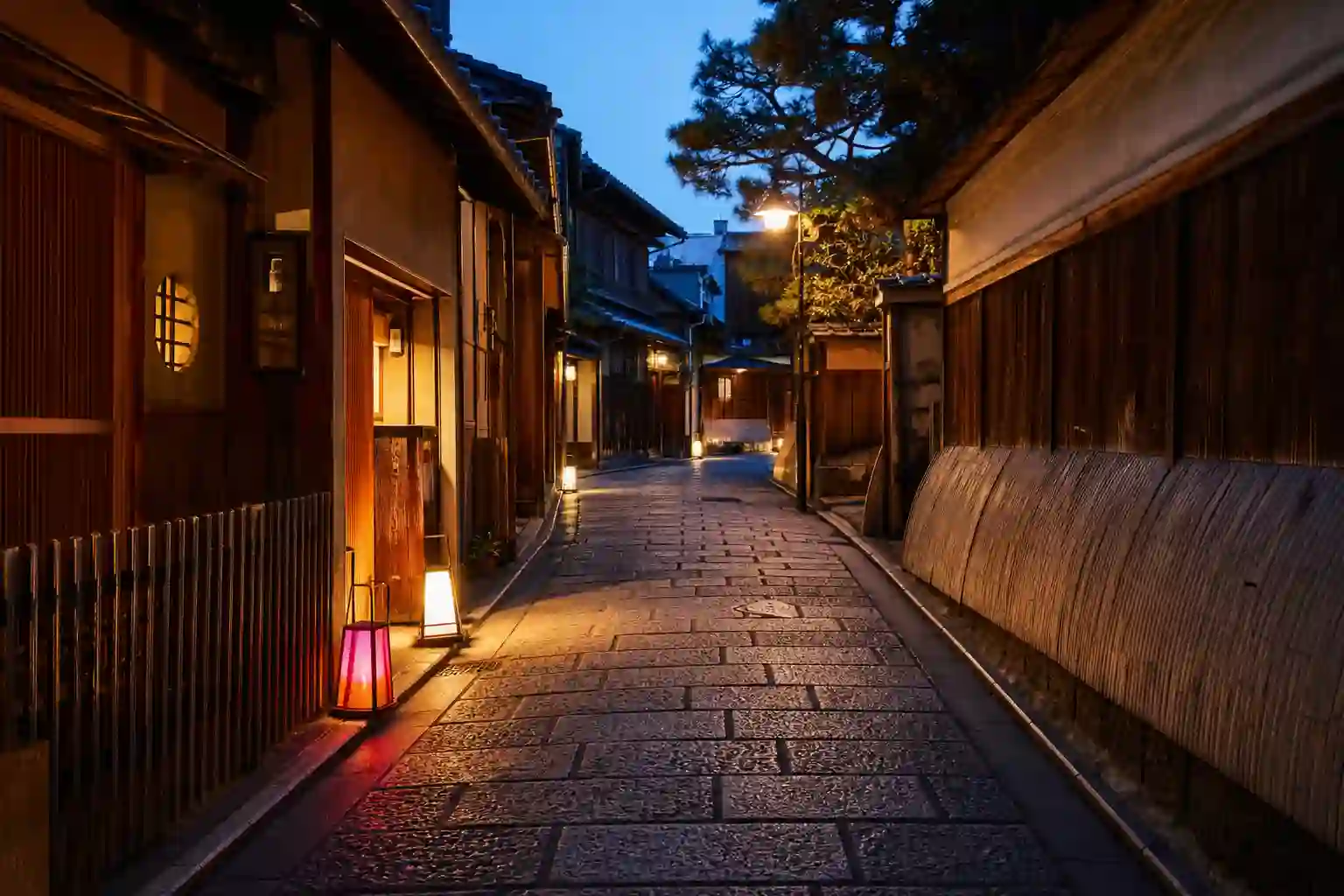
Seeing a maiko or geiko turn into a Gion side street can feel like a movie moment. The temptation is to lift your phone, follow for a few metres and try to get the perfect shot. That is exactly where the useful answer gets lost online. You are not forbidden from taking photographs everywhere in Kyoto, and there is no nationwide “no cameras near geisha” law. But photographing people at work without permission, entering private lanes and chasing someone through the street are not harmless tourist habits.
The short answer: do not photograph a maiko without permission
Kyoto’s official visitor information is clear about the most important point: in Southern Gionmachi, following geiko or maiko and taking photographs without permission are prohibited acts. The Kyoto Online Tourist Information Center also warns that even where a photograph is not specifically prohibited, asking a maiko for a handshake or commemorative picture is considered a nuisance.
That is different from saying “you can never photograph a maiko.” A ticketed performance, a licensed photo experience or a clearly designated event is a different situation because the person has agreed to be part of that setting. A performer posing for an organised programme is not the same as someone trying to get to work while a line of strangers blocks the pavement.
Why the internet turns this into a universal rule
Travel advice loves a clean command: do not photograph geisha. It is memorable, but it blurs three separate questions:
- Are you in a place where photography is explicitly restricted?
- Are you photographing a consenting participant or an individual going about their job?
- Are you standing on a public street without obstructing anyone, or entering a private lane and treating it like a film set?
Kyoto’s official guidance treats these details as important. The city’s recent “four guidelines” ask visitors not to follow, touch or photograph geiko and maiko without permission, and to respect marked private property. JNTO’s responsible photography guide makes the broader point too: ask before photographing identifiable individuals, and treat a refusal or uncomfortable reaction as a clear answer.
Gion is a neighbourhood, not a stage
Gion contains restaurants, teahouses, homes, offices and narrow lanes used by people who live and work there. Some of the most picturesque alleys are private roads or have specific photography restrictions. A sign at the entrance matters. So does a rope, barrier or a notice attached to a building. If you cannot tell whether a lane is public, stay on the main route rather than testing the boundary for a photograph.
This is where “but everyone else was doing it” becomes a particularly bad defence. A group can be wrong together. Blocking a doorway, stepping into a private entrance, or crowding around a passing maiko makes the street less usable for residents and businesses. The Kyoto City Tourism Association’s guidance is not asking visitors to stop looking at the neighbourhood; it is asking them to stop turning working people into props.
What to do if you see one
Put the camera down first
The easiest respectful response is to let the person pass. Do not call out, touch clothing, walk backwards in front of them or follow at a distance that clearly feels like pursuit. If you have already raised your phone, lowering it is a better instinct than trying to negotiate a shot while they are moving.
Use the space properly
Stay on the public path, keep entrances clear and do not stand in the centre of a narrow lane. Kyoto’s official advice specifically mentions trespassing and photographing private property as problems observed in Southern Gion. A beautifully framed wooden doorway may still belong to someone. Photograph the street as a streetscape, not somebody’s home.
Choose a consent-based alternative
If you want to understand geiko and maiko culture, book a legitimate performance or experience where photography rules are explained in advance. Kyoto’s official visitor information points to traditional dance performances such as Gion Corner as one way to see the art without interrupting a performer’s commute. You get a better explanation, a more dependable time and a setting where the audience’s role is understood.
Can you take a street photo in Gion at all?
Yes, but read the sign and the situation. Photographing architecture, lanterns and an empty lane from a public place is not the same as photographing a person’s face. If strangers appear incidentally in a wide street scene, avoid making one person the subject, and do not publish a close-up without consent. JNTO’s photography guidance recommends asking permission for identifiable individuals, even in public, while recognising that crowded public spaces are different from a portrait session.
The same practical rule works at temples, festivals and markets: look for posted restrictions, avoid private areas and do not let the camera turn you into an obstruction. A phone is small, but the behaviour around it can still be intrusive.
The Japanify reality check
“Never photograph a geisha” is too broad, while “it is a public street, so anything goes” is worse. The useful middle is simple: do not take unauthorised photos of a geiko or maiko, never follow or touch them, obey marked private-lane and photography restrictions, and use a performance or organised experience if you want a photograph of the tradition.
Kyoto is generous with visual moments. You do not have to collect every one. Put the phone away, let the person get where they are going, and remember the encounter without making it their problem. For more context on how the city’s historic streets fit together, Japanify’s small-group Kyoto walks focus on the places and stories behind the postcard view.
Sources and current guidance
Check Kyoto’s four visitor guidelines, the Kyoto Online Tourist Information Center FAQ, the Southern Gionmachi manner message and JNTO’s responsible photography guide before visiting. Restrictions can be posted at specific entrances, so follow the signs you see on the day.