
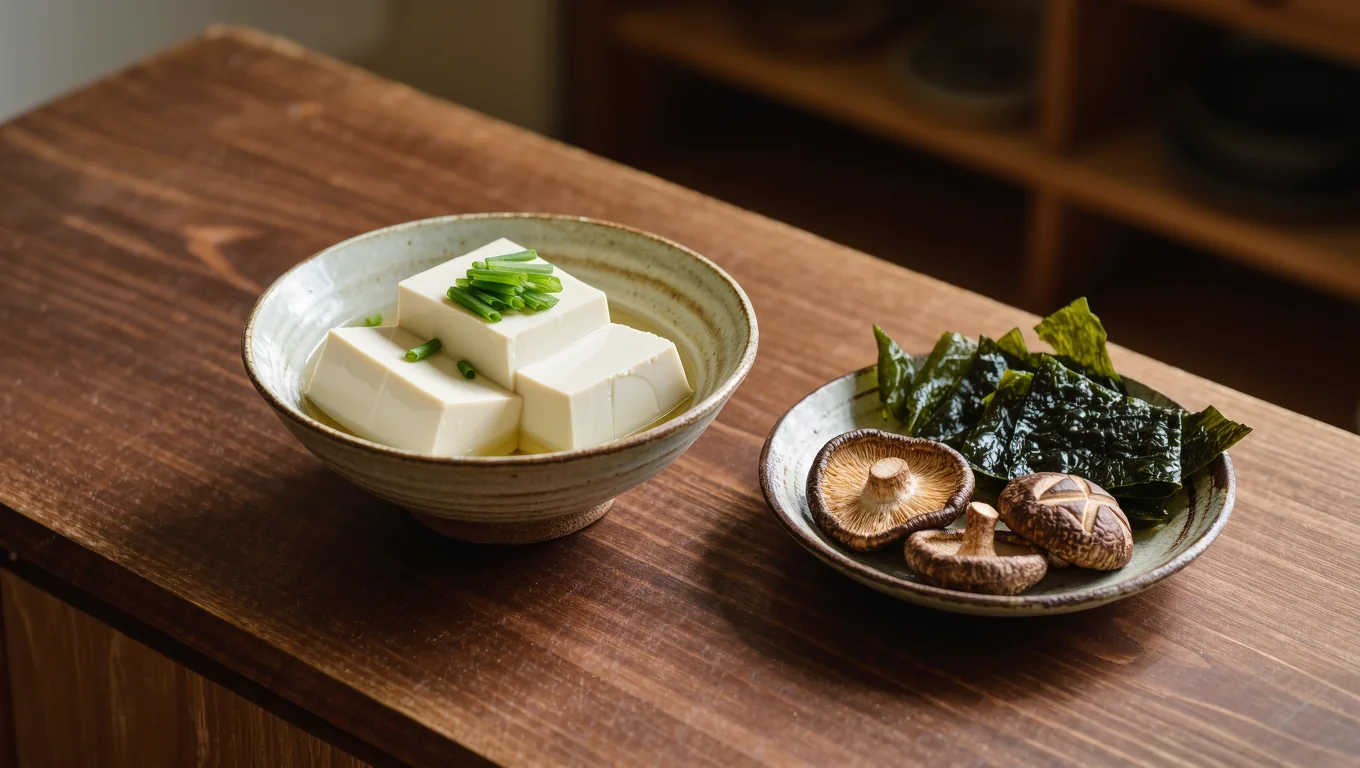
Tofu can be vegetarian. A tofu dish in Japan is not automatically vegetarian. The useful question is what went into the broth, dipping sauce and toppings, not simply whether the biggest thing in the bowl is made from soybeans.
That distinction saves a lot of confusion. You do not need to assume that every vegetable dish contains fish, or that Japanese food is off-limits. You do need a little more information than a photograph of tofu beside some greens.
Why a vegetable-looking meal may still contain fish
The Japan National Tourism Organization's vegetarian guide recommends checking stock and base ingredients, even when a picture menu looks helpful. It also gives a small but telling example: the sauce supplied with a pack of natto can contain fish-based dashi. The soybeans and the seasoning sachet are two separate ingredient questions.
Use the same logic with a restaurant dish. Removing a visible topping is not enough if the soup beneath it was already made with fish. Conversely, a dish prepared with plant-based stock does not become unsuitable merely because the menu uses the word dashi. The recipe decides.
Dashi does not always mean fish stock
Dashi is a Japanese cooking stock with several possible bases. Kikkoman's explanation of Japanese soup describes bonito-based stock and alternatives made with kombu kelp or dried shiitake mushrooms. Its own vegetable-and-tofu soup example uses bonito stock, while explicitly suggesting kombu stock for a vegan version.
That is a particularly useful illustration because the visible ingredients need not change much. A bowl can contain tofu and vegetables in either version. What changes is the stock carrying the flavour through it.
So “Does this contain dashi?” is only the start of the conversation. Ask whether that dashi contains fish or other animal ingredients. If a restaurant says it uses kombu, you can still ask whether that is the complete stock or one ingredient in a mixture. There is no need to sound accusatory; you are establishing what is in the food.
Two Kyoto examples: read the actual description
At Tenryu-ji, the official description of Shigetsu's shojin cuisine explicitly says animal-derived ingredients are not used, describing a cuisine based on vegetables, wild plants and seaweeds. This is useful information from the people operating the restaurant, rather than a conclusion drawn from a temple address or a plate of tofu.
By contrast, Hanagokoro's own explanation of its shojin-style meal clearly states that bonito stock is used. It distinguishes this offering from fully animal-free shojin cuisine. The restaurant is telling you the relevant detail; a shortened listing elsewhere could easily lose it.
Neither example justifies a claim about every temple restaurant in Kyoto. Together they show why the full wording matters. A cuisine described as shojin-style or shojin-inspired should not be silently upgraded into an assurance that no animal ingredients are present. Equally, there is no reason to dismiss an explicitly plant-based meal because another venue prepares a different version.
These are ingredient-description examples, not reviews based on a personal meal, live availability checks or promises that every individual requirement can be met.
Ask a short, specific question before ordering
Instead of asking only whether something is vegetarian, explain what you avoid. For a vegetarian who does not eat fish, a useful request is: “I don't eat meat or fish. Does the stock or sauce contain either?” If you are vegan, add the other animal ingredients you avoid, including eggs and dairy. Do not expect one label to communicate every detail of your diet.
JNTO recommends carrying a written explanation in Japanese and informing the restaurant in advance, especially for a set menu. A translation on your phone can help, but show the complete request. A screen that says only “no meat” leaves the central fish-stock question unresolved.
Then give staff time to check. If the answer remains uncertain, choosing a different dish or restaurant is more useful than repeatedly asking for the answer you hoped to hear. An honest “we can't confirm” is information you can act on.
Plan one dependable meal, not a whole day of improvising
Kyoto's official food guide acknowledges the difficulty that fish stock can create for restricted diets while pointing to vegetarian, vegan and adaptable options. It recommends advance reservations because some restaurants need to prepare specifically for the request.
For a day out, find one meal that fits your requirements before filling the rest of the itinerary. Check the restaurant's current opening days and booking instructions, and save a second option in the same general area. That is a more comfortable plan than arriving hungry at the nearest place and hoping the kitchen can rebuild a set menu.
Keep a note of a meal you have actually confirmed, rather than saving only a photo or a listicle's recommendation. When you book, include your requirements in that booking and look for a clear response. A table reservation on its own does not establish what the kitchen has agreed to serve.
A quick check for the dish in front of you
- Main ingredient: what is the tofu, vegetable or noodle dish itself made with?
- Stock: is the broth plant-based, fish-based or something else?
- Sauce and toppings: do they introduce ingredients you avoid?
- Whole meal: have you checked the accompanying soup and small dishes as well?
- Answer: has someone confirmed the recipe, or are you still relying on its appearance?
You can enjoy Japanese food without turning every lunch into a guessing game. Look beyond the tofu, ask about the stock, and use restaurants' own information where it is available. The aim is a meal you can relax over, not a universal rule about what an entire country cooks.
Information checked November 9, 2026. Recipes and menus vary. The featured image is an AI-generated illustration, not a photograph of a named restaurant's meal.