
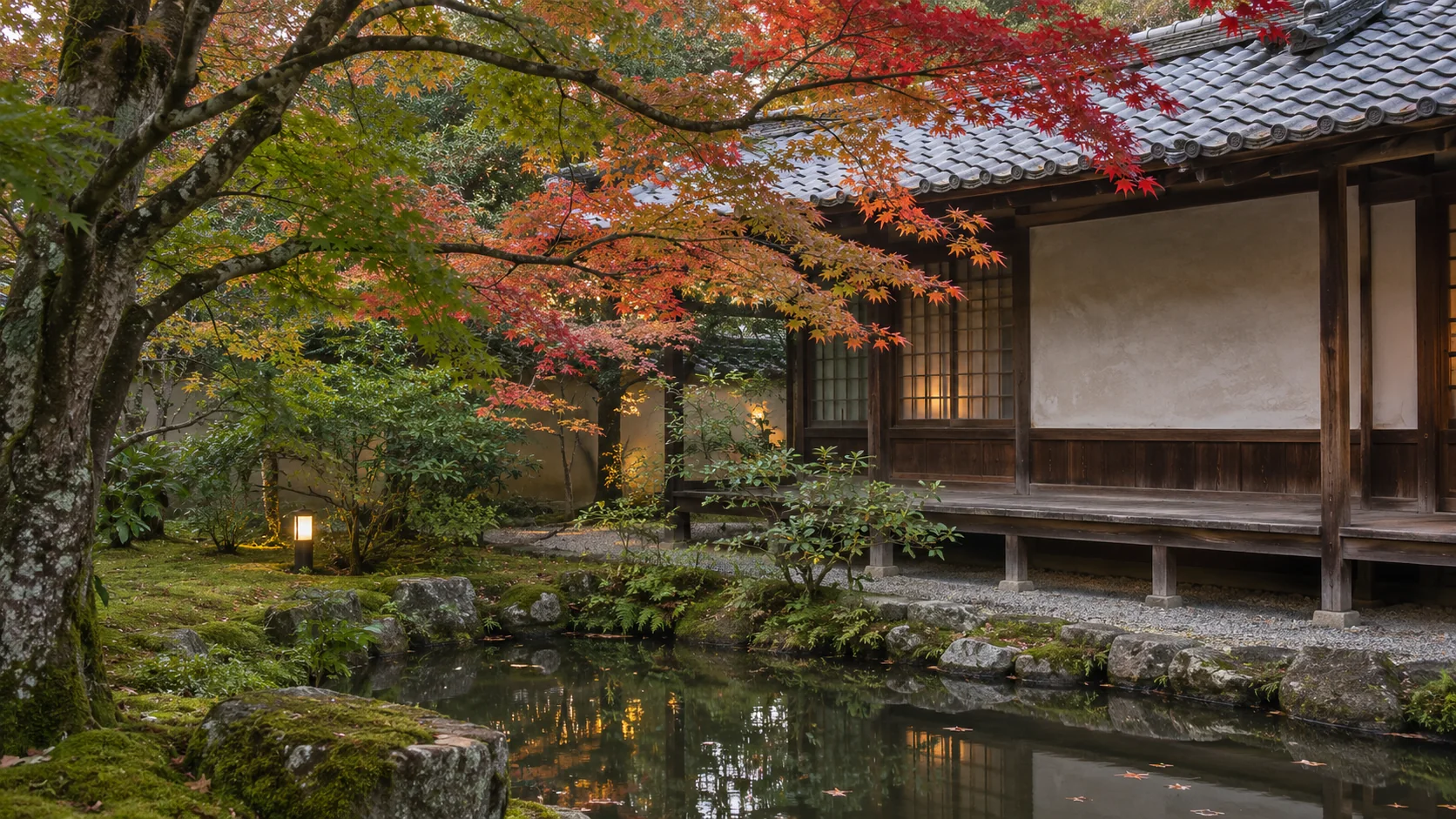
Kurodani's autumn night viewing begins tonight, Friday 13 November 2026, with a new reason to look beyond the main temple garden: Eishoin, one of the subtemples at Konkai Komyoji, is being advertised for its first nighttime light-up opening.
The season runs until 6 December. The useful detail is that there are separate tickets for the main halls and garden, Eishoin, or both. There is also a daytime programme with access the evening ticket does not provide. Choose the visit you actually want before joining a ticket queue.
What is new this season
The temple and its event operator announced the programme in an official release dated 1 October. The opening date is 13 November; the announcement date is not the event date. That release describes Eishoin's illuminated opening as a first, alongside the established autumn programme at the main temple.
For a visitor, the change creates a choice. You can concentrate on the main halls and Shiun Garden, visit Eishoin on its own, or make time for both. We would decide that in advance rather than assume every illuminated area belongs to one admission ticket.
This is an opening notice, not a report that the leaves have reached peak colour. An event calendar confirms when the gates open; it cannot promise what every maple will look like on your evening.
The three standard night tickets
The official nighttime event page lists these individual admission prices:
- Main temple: Mieido, Ohojo and Shiun Garden, ¥1,000 for adults and ¥500 for elementary-school children.
- Eishoin light-up: ¥800 for adults and ¥400 for elementary-school children.
- Combined main-temple and Eishoin ticket: ¥1,600 for adults and ¥800 for elementary-school children.
For an adult visiting both, the combined ticket is ¥200 less than the two individual tickets together. That saving is useful only if you want both parts of the visit. A shorter evening with one admission can be a sensible choice.
Standard night viewing runs from 5:30 p.m. to 8:30 p.m., with last admission at 8 p.m. The reception is in front of Mieido, and ordinary admission does not require a reservation. Separate premium early-entry plans do require booking; do not confuse those plans with the walk-in programme.
Leave time for more than the garden
The evening programme includes live traditional instrumental music, with instruments such as koto and shinobue. The advertised starting times are 5:45 p.m., 6:30 p.m. and 7:30 p.m.; the current event page gives each performance as about 20 minutes. Performances are included with normal admission to the main programme.
If listening is part of the appeal, choose a performance first and work your arrival around it. Turning up at the last-admission time would miss all three advertised starts. We would also leave a margin for finding reception and moving through the visit, rather than aim to arrive at the exact minute the music begins.
Keep the rest of your evening loose. A restaurant booking immediately after the closing time can turn a garden visit into a clock-watching exercise. The event's scheduled closing time also does not include the journey back to wherever you are eating.
Want the upper floor of the gate? Choose daytime
The illuminated Sanmon gate is part of the evening setting, but its upper floor is not open during night viewing. This is an easy distinction to miss when an event photograph shows a lit gate.
The separate daytime programme runs over the same 13 November to 6 December period, from 10 a.m. to 4:30 p.m., with last admission at 4 p.m. It offers the main halls and garden, the gate's upper floor, or a combined ticket for those two areas.
The adult daytime combined ticket is also ¥1,600. It combines different things from the ¥1,600 night ticket: daytime means the main areas plus the gate, while nighttime means the main areas plus Eishoin. Check the names of the included areas, not just the price. Do not assume that buying one package provides access to the other session.
There is history behind the setting
Konkai Komyoji is also known as Kurodani. Its own account of its Aizu and Shinsengumi connections explains that the temple became the headquarters of Matsudaira Katamori's Aizu forces when he took on the role of Kyoto military commissioner in the late Edo period.
The history also needs a small qualification when imagining who walked through which room. The temple records that Mieido and Ohojo were lost to fire in 1934. A historical association with this site does not mean every present-day interior survives unchanged from the samurai period.
Reading that short background before you arrive gives the buildings a little more context. There is no need to turn an evening visit into a history exam, but the site has more to offer than a seasonal photograph.
Getting there without a last-minute rush
The temple is at 121 Kurodani-cho in Sakyo Ward. Its official access page gives a walk of about ten minutes from the Okazaki-michi city bus stop, served by routes 32, 203 and 204. Check the appropriate boarding stop and current timetable for your starting point; those route numbers are not a claim that every service leaves Kyoto Station.
Allow for that final walk when planning arrival. Wear shoes you are comfortable walking in after dark, and bring a reusable bag if you expect to remove them indoors. If steps or walking surfaces are a concern, ask the organisers about the specific viewing route before buying admission.
All dates, hours and ticket details above were checked against the official programme on 13 November 2026. Recheck the event page before travelling. Our recommendation is one considered visit, with the right ticket and time to listen, rather than trying to squeeze several night openings into the same evening.
Featured image: an AI-generated Kyoto-inspired garden illustration, not a photograph of Konkai Komyoji or Eishoin, and not a report of current foliage conditions.