
Kyoto Modern Architecture Festival 2026 runs from October 31 to November 8, but its main passport-entry visits happen on just four dates: October 31, November 1, November 7 and November 8. That distinction is the useful news if you are planning next week's sightseeing. Turning up on a random weekday with a festival pass will not magically open every building.
The appeal is straightforward: a chance to look beyond Kyoto's familiar temple-and-shrine itinerary and spend time with buildings you might otherwise walk straight past. The reward can be a staircase, a window or a school building rather than another famous skyline. You do not need to know architectural terminology to enjoy looking properly.
Which weekend should you choose?
The official Kyoto tourism listing separates the festival period from the passport openings. The first weekend is Saturday, October 31 and Sunday, November 1; the second is Saturday, November 7 and Sunday, November 8. Individual buildings keep their own schedules within those dates.
Choose your buildings first, then your pass. That sounds obvious, but the opposite approach is surprisingly easy: buy the ticket with the broadest-looking date range, save a few attractive pictures, and only later discover your favourite building opens on the weekend you cannot attend.
This is not one venue with one entrance time. Treat the programme as a collection of appointments, even when no reservation is required. A building listed for the first weekend is not automatically a fallback for the second.
How much does the architecture festival passport cost?
The organiser's passport page lists these tax-inclusive prices. The first figure is the early price through October 25, 2026 at 11:59pm; the second applies from October 26:
- First-weekend pass: ¥2,800 / ¥3,000, valid October 31 and November 1.
- Second-weekend pass: ¥2,800 / ¥3,000, valid November 7 and 8.
- Full-period pass: ¥4,800 / ¥5,000, covering all four passport-opening dates.
- U29 full-period pass: ¥1,800 / ¥2,000, for people born on or after January 1, 1996. Bring identification showing your date of birth.
There is no single-day passport. Guided tours and paid special events are generally separate bookings and charges; ordinary transport is not included in the basic passport. Sales are quantity-limited. These are published prices, not a promise that a particular ticket remains available when you read this.
For a visitor staying only one weekend, the full-period version is not necessarily better value. Compare it with your actual dates and interests rather than the number of days printed on the festival headline.
A first-weekend afternoon: two buildings near Marutamachi
For a manageable starting point, consider the Gosho-nishi area, west of the Imperial Palace grounds. Two programme entries share an afternoon opening window and list Marutamachi Station on the Karasuma subway line as their nearest station. That makes a more coherent plan than collecting buildings scattered across the city.
Heian Jogakuin University's Meiji Hall
The festival entry for Meiji Hall lists interior access on October 31 and November 1 from 1pm to 5pm, with final reception at 4:45pm. A valid passport is required; advance application is not. The brick school building dates to 1895 and was designed by Alexander Nelson Hansell.
Look for the pale sandstone bands against the brick and the distinctive shaped gables. This is a good opportunity to spend a few minutes on the outside before stepping in. A photograph of the whole facade and a closer look at one junction between materials tell different stories; neither requires rushing to the next address.
St Agnes Church
Nearby, St Agnes Church has the same published festival window: October 31 and November 1, 1pm–5pm, final reception 4:45pm. It also requires a passport but no advance application. Completed in 1898 to a design by James McDonald Gardiner, the church offers a different interior to compare with the school: exposed timber roof structure and stained glass.
Both listings generally permit photography and online sharing, while asking visitors to keep students, staff and other participants out of their pictures. Both also ask visitors not to arrive by bicycle. The published audio guides are Japanese-only, so do not plan around an English narrated tour.
We would leave the morning flexible rather than arrive at these doors at 10am. Have lunch before the afternoon window, keep the two visits unhurried, and choose an optional extra only after checking its separate programme. This is a suggested approach, not a timed itinerary guaranteed to fit queues.
Does a passport guarantee entry everywhere?
No. Some buildings require an additional same-day online time-slot ticket. The organiser's numbered-ticket instructions say bookings open at 7am on each relevant building's opening day through ArtSticker, on a first-come basis. Tickets cannot be issued at the venue, and an online time slot does not replace the required passport.
Check whether the restriction covers the whole building or only a particular tour or room. Those are different situations. Do not build a morning around a venue requiring a slot and assume you can sort it out at the door.
Save the exact programme pages for your chosen places, charge your phone and leave a gap between visits. If you need step-free access, confirm arrangements before committing; a building being open for a festival is not proof that every room is accessible.
The reason to go is the building, not the scorecard
Our recommendation is to choose a small group of places that genuinely interest you. Notice how the spaces differ, not just how many you have entered. Two buildings you remember are a better afternoon than six you can only identify from your camera roll.
For this Kyoto Now update, the important dates are the upcoming October 31–November 1 openings and the October 25 early-price cutoff. Everything else follows from the individual programme. Check those pages again before leaving your accommodation, especially if one particular interior is the reason for your trip.
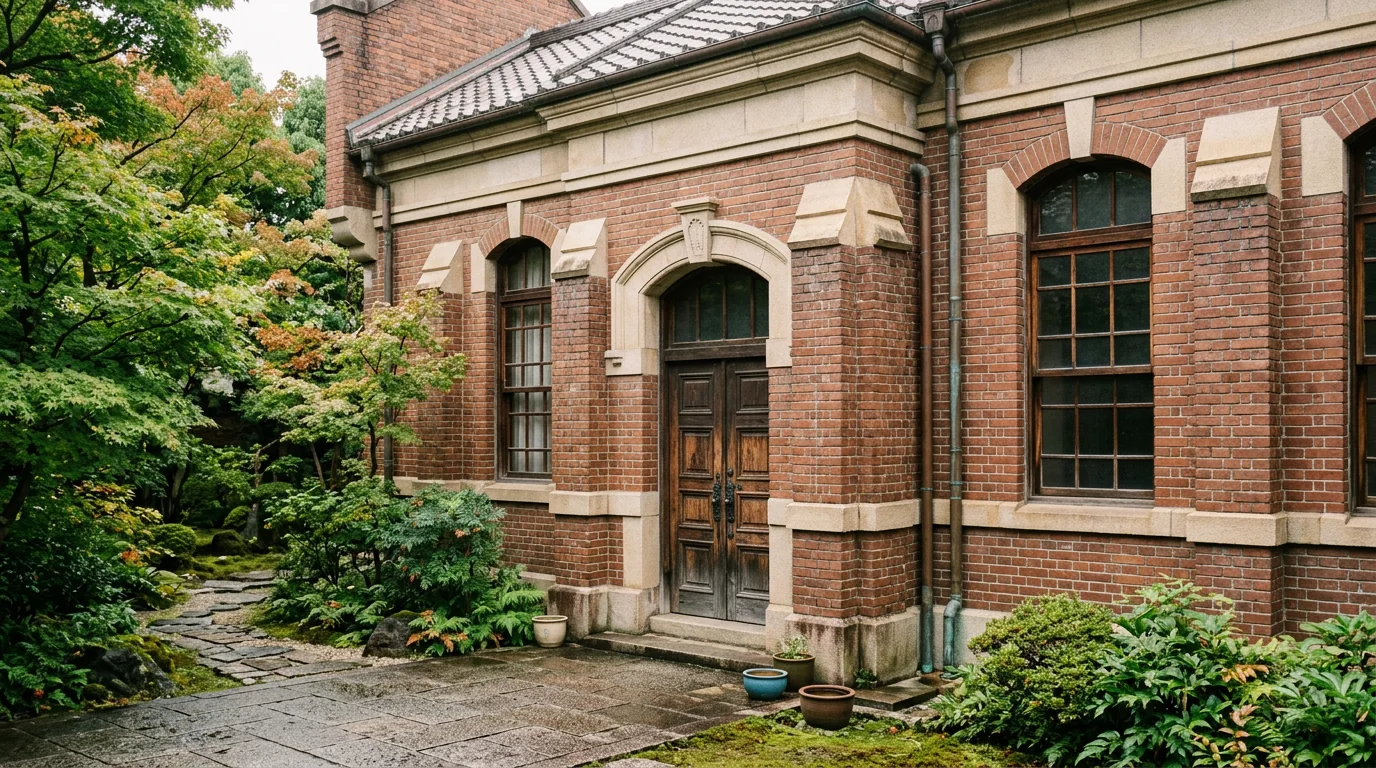
Dates, prices and programme details checked October 23, 2026. Openings may change. The featured image is an AI-generated illustration inspired by Kyoto's Meiji-era architecture, not a photograph of a participating venue.