
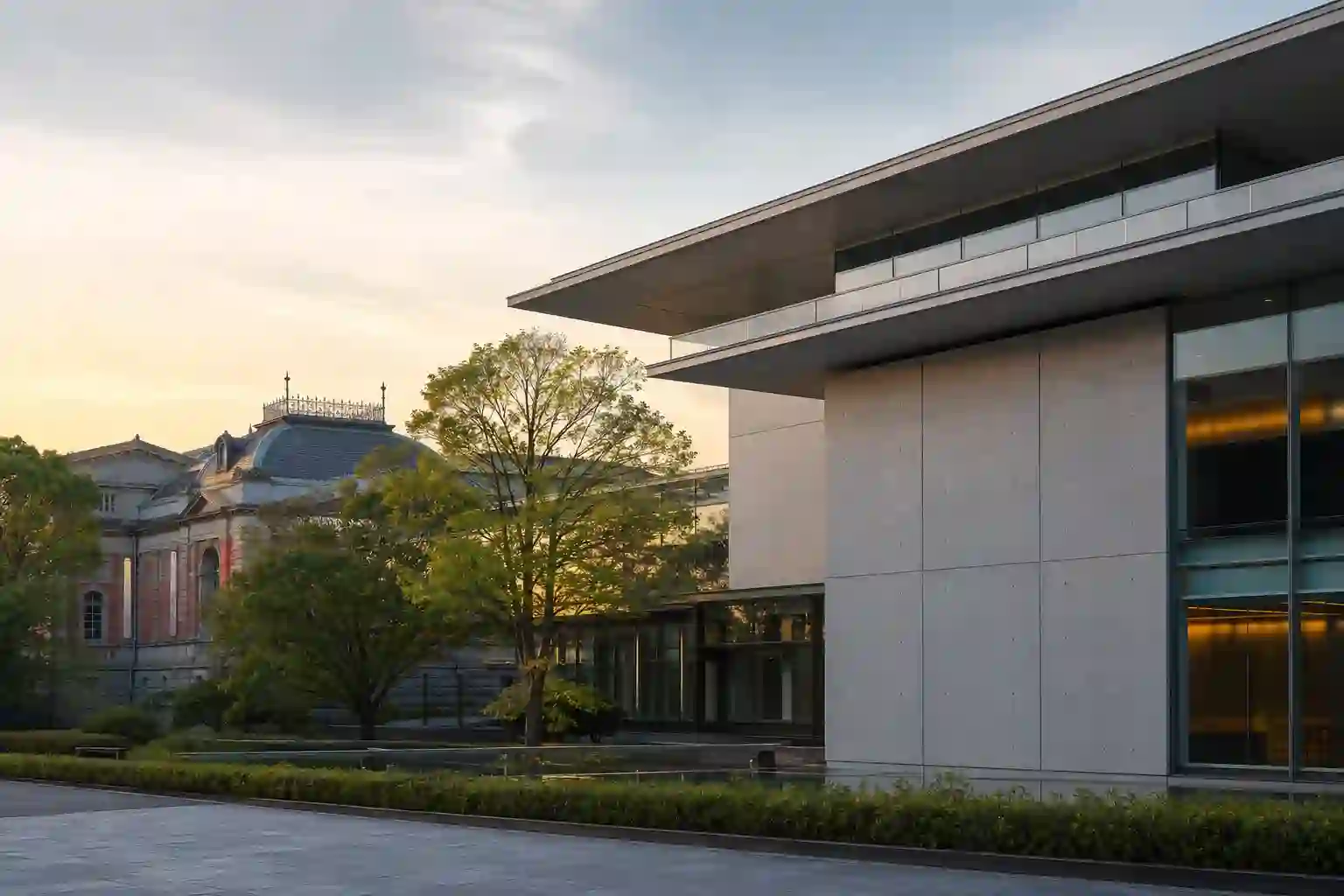
Kyoto’s summer news is not only about festivals and heat. The Kyoto National Museum has two thoughtful feature exhibitions on view now, both scheduled through September 6, 2026. One follows prayers and objects buried in the ground; the other brings archaeology, bronze bells and the paintings of Tomioka Tessai into the same conversation. If you want a quieter, air-conditioned cultural stop after Higashiyama, this is a very good week to go.
What is on at the Kyoto National Museum?
The current programme is split across the Heisei Chishinkan Wing. Buried Prayers: Time Capsules of Faith looks at objects placed underground from the Kofun period through the Edo period. Masterworks of the Tatsuuma Collection of Fine Arts: From Archaeological Artifacts to Tomioka Tessai draws from a collection in Nishinomiya and connects Yayoi-period bronze bells with paintings and literati culture.
That pairing is more interesting than it first sounds. The first exhibition asks what people hoped the earth would protect or carry forward. The second shows how a modern collector’s curiosity moved between archaeology, art history and personal relationships. You do not need to be an expert in Japanese history to follow either show, but both reward visitors who slow down and read the labels.
Buried Prayers: objects under Kyoto and Osaka
The museum describes buried objects as a kind of time capsule. Across different periods, people placed earthenware, coins, foundation offerings, sutra deposits and other materials into the ground. The reasons varied: protecting a building or piece of land, purifying a place, preserving teachings, or expressing a wish that would outlast the person making it.
The exhibition is especially relevant in Kyoto because it focuses heavily on objects excavated in the Kyoto–Osaka region. A tile incised with a monk from Kyoto’s Katagihara Bonyama is among the objects identified by the museum. Rather than treating archaeology as a pile of old things, the show gives you a way to think about religious practice as something embedded in construction, landscape and memory.
Allow yourself more time here than a quick “museum before dinner” visit. The objects are often small, and their meaning depends on the accompanying explanation. If you are travelling with someone who prefers stories to grand paintings, this may be the exhibition that carries the afternoon.
Masterworks from the Tatsuuma Collection
The second feature exhibition follows the Tatsuuma family collection from Hyogo. Its founder, Tatsuuma Etsuzō, inherited a brewing business but kept working as an archaeologist, collecting and researching objects rather than simply displaying them. The museum highlights his group of more than fifty dōtaku, the ritual bronze bells associated with Yayoi-period Japan, alongside Jōmon and Kofun-period material.
The show then turns toward Tomioka Tessai, the Kyoto-associated painter and literati figure. Tessai had a close relationship with the Tatsuuma family, and the exhibition traces that connection through paintings and letters as well as objects. Some Tessai works are scheduled for the later part of the run, including pieces on view from August 11 to September 6, so repeat visitors may find that a second visit reveals something different.
There is a useful human thread here: collecting is presented as curiosity and stewardship, not just wealth. Tatsuuma’s interest in bells, beads, manuscripts and paintings makes the exhibition feel like a portrait of how a person learns over a lifetime.
Dates, tickets and Friday evening hours
- Both feature exhibitions run from July 14 to September 6, 2026.
- The venue is the Heisei Chishinkan Wing at the Kyoto National Museum.
- Regular hours are 9:30 a.m. to 5 p.m., with admission until 4:30 p.m.
- On Fridays, the museum stays open until 8 p.m., with admission until 7:30 p.m.
- Adult admission is ¥700; university students with ID pay ¥350. The ticket includes all galleries in the Heisei Chishinkan Wing.
- The museum is normally closed on Mondays. It was open on July 20, a national holiday, and closed on July 21; check the calendar before travelling on a holiday week.
The Friday extension is the practical headline for visitors. You can visit after a daytime walk in Gion or Higashiyama, then continue to dinner without trying to squeeze a museum into the hottest part of the afternoon. It is still worth arriving before the final admission time; a late entry is not the same as having a relaxed hour inside.
How to build it into a Kyoto day
The museum is in Higashiyama, near the National Museum bus stop and within reach of Keihan’s Shichijo area. Pair it with one nearby destination rather than stacking the entire eastern side of Kyoto into one day. Sanjusangendo is an obvious architectural neighbour, while the streets around Chishakuin and the Kyoto National Museum’s older red-brick buildings make for a calmer walk than the busiest lanes around Kiyomizudera.
On a Friday, I would start with an early local walk, take a break during the hottest hours, and enter the museum around 4:30 p.m. That gives you enough time for one exhibition before the evening extension, with a choice to stay longer if the archaeology catches you. Kyoto’s museums are often treated as rainy-day backups; in midsummer, they are also a sensible way to make the day more comfortable.
If you want a guided Kyoto day before or after the museum, Japanify’s small-group walking tours focus on context and an unhurried pace. The museum itself is best explored at your own speed, but a good walking route can keep the rest of the day from becoming a rush between famous stops.
What to check before you go
Exhibition dates and hours are current as published by the Kyoto National Museum on July 31, 2026, but museum schedules can change for holidays, closures or special programming. Check the museum’s English homepage, the pages for Buried Prayers and the Tatsuuma Collection exhibition before setting out. The city’s July 28 press release also confirms that Kyoto’s recent cultural calendar is being updated quickly, so official pages are more useful than an old guidebook.