
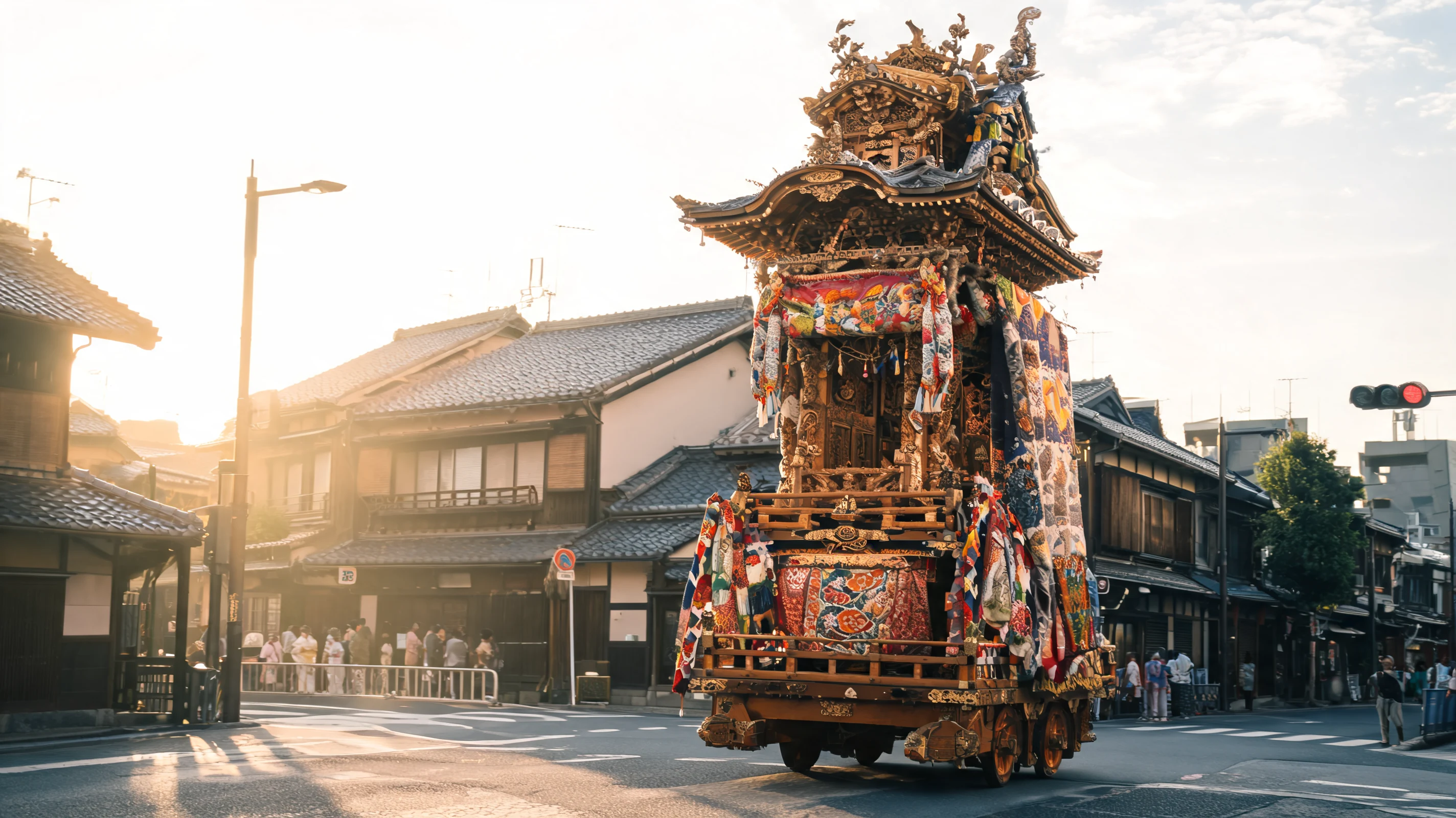
Kyoto’s calendar has been pointing toward July 17 for weeks. Today is the first major climax of Gion Matsuri: the Saki Matsuri Yamaboko Junko, when 23 enormous festival floats move through central Kyoto from around 9:00 in the morning. Later, the festival shifts from the floats to the gods themselves, with the evening Shinko-sai beginning at Yasaka Shrine.
That combination makes July 17 a remarkable day to be in Kyoto, but it is not a normal sightseeing day. Streets change, buses detour, popular viewing areas fill early, and the most impressive moments are not always the easiest ones to photograph. Here is the useful version of today’s Kyoto update.
What is happening today?
The morning’s headline event is the Saki Matsuri Yamaboko Junko. Kyoto’s official tourism guide describes it as the procession of 23 yamaboko floats, each a moving piece of festival art built and maintained by its neighbourhood association. The Gion Matsuri Yamaboko Federation’s schedule places the procession from 9:00, while the Kyoto City Tourism Navi lists July 17 as the 2026 date for the Saki Matsuri and July 24 for the Ato Matsuri procession.
The floats are not parade props in the modern commercial sense. They are part of a long religious festival whose rituals run through the entire month of July. Their carved wood, woven hangings, metal fittings, and musical traditions are what make the procession feel less like a stage show and more like a neighbourhood carrying its history into the street.
Then comes the Shinko-sai
After the daytime procession, the focus moves east toward Yasaka Shrine. The Gion Shopping Street Association lists this year’s Shinko-sai for Friday, July 17, from 16:00, beginning at Yasaka Shrine and continuing toward the Shijo Otabisho. Three mikoshi—portable shrines associated with Yasaka Shrine’s deities—leave the shrine after the ceremony and travel through the parish area.
This is a different atmosphere from the morning. The floats are tall, slow, elaborate, and visually easy to understand. The Shinko-sai is more kinetic and more overtly religious. If you watch, remember that you are close to a living ritual, not simply a second parade. Give the mikoshi and their attendants space, avoid blocking narrow streets, and follow the movement of the crowd rather than trying to force your way into the front.
Transport is the real Kyoto story today
Kyoto City Bus and Subway has published a specific Gion Matsuri plan for July 17. A temporary bus is scheduled roughly every ten minutes between Kyoto Station and Shijo Kawaramachi: from Kyoto Station between 9:00 and 12:00, and back from Shijo Kawaramachi between 9:17 and 12:47. The city is also adding subway service and station guidance staff.
At the same time, buses using Shijo Street are subject to route changes. The published disruption window for the daytime procession is approximately 7:50 to 14:10, and evening changes for the Shinko-sai begin around 17:30 and continue until the end of service. That does not mean every bus in Kyoto stops, but it does mean that a route which looks simple on a map can become slow or unexpectedly indirect.
Our practical advice is simple: use the subway for the long part of your journey, then walk the final stretch. Karasuma Oike, Shijo, and Kyoto Shiyakusho-mae are useful areas to think from, but check the station signs and current announcements before committing to a route. If you are carrying luggage, have a hotel outside the central area, or need a guaranteed arrival time, leave much more margin than Google Maps normally suggests.
How to watch without making the day harder
- Choose one main event. The morning procession and evening Shinko-sai are both substantial. Trying to do every float, every neighbourhood display, and the full shrine ritual will turn a memorable day into a hot, crowded endurance test.
- Arrive early for the floats. The official start is around 9:00, but the best sightlines in central Kyoto do not stay open until 8:55. A quieter position a little farther from the busiest intersection is usually better than standing behind a wall of phones.
- Expect heat. July in Kyoto is humid. Bring water, a hat, and a plan for shade. Do not treat the fact that the event is traditional as evidence that the weather will be kind.
- Do not touch the floats. The textiles, ropes, fittings, and carved details are part of the objects’ cultural value. Watch the teams work and keep clear of wheels, ropes, and turning corners.
- Keep the evening religious. The Shinko-sai is visually exciting, but it is not a performance staged for tourists. Lower your voice near the shrine, avoid flash in people’s faces, and let attendants manage the movement.
Is today a good day for ordinary sightseeing?
Yes, but only if you adjust the definition of “ordinary.” Central Kyoto will be slower and more crowded, while some destinations outside the festival core may feel comparatively calm. This is a good day to explore on foot, visit one area deeply, and accept that you may not reach every planned stop.
It is a poor day to stack reservations across both sides of the city. Leave space between a morning festival viewing and lunch. If you are joining a small-group walk, check the meeting point carefully and allow for the possibility that your bus stop has moved. Japanify’s Kyoto walking tours are built around local streets and flexible pacing, but festival-day transport still deserves a buffer.
Gion Matsuri rewards attention more than frantic collecting. Look up at the float details, listen for the musicians, notice which neighbourhoods are doing the work, and remember that the festival continues after today: the Ato Matsuri procession is scheduled for July 24. You do not have to conquer Kyoto in one day to have seen something extraordinary.
Sources and last-minute checks
Before leaving, check the Kyoto City Bus and Subway notice for service changes, the Kyoto Tourism Navi listing for the procession dates, and the Gion Matsuri Yamaboko Federation schedule for the festival timetable. For the evening mikoshi movement, the Gion Shopping Street Association notice gives the 16:00 start and route context.