
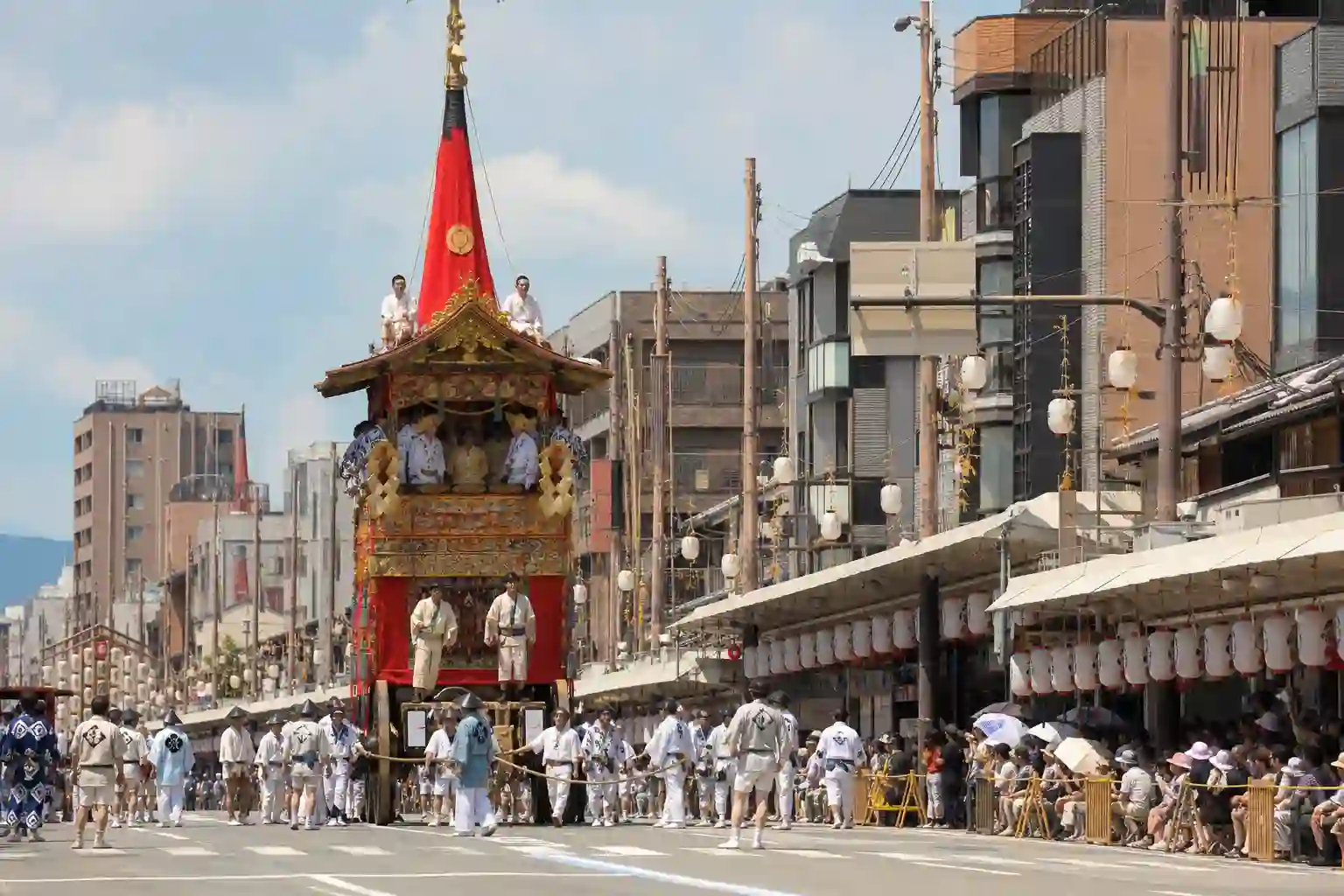
Kyoto today: the second Gion Matsuri procession
Friday, July 24 is one of those Kyoto dates when the city’s calendar is more useful than a generic “top things to do” list. At 9:30 this morning, the latter-festival Yamahoko Junko sends Gion Matsuri floats through central Kyoto. The procession is the practical headline, but it is not the only thing worth knowing if you are in town this weekend. Museums have reopened their summer collections, several normally closed spaces are offering limited access, and the heat will shape your day more than any itinerary template.
This is a live Kyoto Now update, so check the clock before you leave. If you are reading after July 24, the procession itself has finished; the exhibition and special-opening dates below continue into the weeks ahead.
What is happening this morning
Kyoto’s official tourism guide lists the latter-festival Yamahoko Junko for July 24 at 9:30 a.m. The float procession is part of the second half of Gion Matsuri, following the latter Yoiyama period of July 21–23. The early procession on July 17 involved 23 floats along Shijo, Kawaramachi, and Oike streets; today’s event is the later procession, with its own route and crowd pattern.
Do not treat it like a parade you can casually join at the last minute. The floats move through a residential and commercial part of the city, and the organisers ask visitors to follow police and security instructions, use public transport, avoid bringing bicycles into participant areas, and respect the neighbourhood. The official guidance also asks visitors not to eat or drink while walking. That is less about a dramatic “Japan rule” than about keeping a dense route safe and passable.
Heat matters. July in Kyoto is hot and humid, and standing in direct sun beside a road is a different physical task from walking between air-conditioned museums. Carry water, take shade breaks, and leave room to step away from the crowd. If you are travelling with children, older relatives, or anyone who struggles in heat, make the procession one short part of the morning rather than the backbone of the entire day.
A calmer way to build the day
The useful move is to see the procession early, then change the temperature and pace. Kyoto’s public transport network is the better tool today; a bicycle can become an obstacle near festival areas, and a taxi may spend more time in diverted traffic than you expect.
After the floats, choose one indoor or shaded stop. The Kyoto National Museum’s galleries reopened for the summer collection season on July 14. Current displays include Buried Prayers: Time Capsules of Faith, the Tatsuuma Collection of Fine Arts, medieval paintings by Minchō and Muromachi-period ink works, Momoyama–Edo folding screens, modern Chinese painting, sculpture, ceramics, metalwork, and lacquerware. The museum’s official calendar lists these programmes through September 6, with the medieval-painting feature running until August 9.
This is a good counterweight to the festival because it slows your eyes down. Gion Matsuri is all movement, sound, rope, wheels, textile, and sunlight; the museum offers objects that reward a cooler, longer look. Check the museum’s current opening hours and admission information before setting out, especially if you are planning around a particular exhibition.
Three special openings worth knowing about
Kōdai-ji: a normally closed inner space
Kyoto’s 2026 Summer Special Openings programme runs through the season. At Kōdai-ji, visitors can see the exterior of a reception hall being restored and a ceiling painting of a dragon in the normally closed inner sanctum of the Kaisan-dō Hall. The official programme lists the opening from July 10 through August 31, 9:00–17:30, with some closure dates and an adult admission fee of ¥800. This is a better choice for visitors who want a specific architectural reason to return to a well-known temple.
Gion-kaku at Daiun-in
Daiun-in’s Gion-kaku tower is shaped like a Gion Matsuri hoko float, which makes it an especially pointed stop during festival week. The tower is normally closed, but the summer programme allows visitors to climb to the third floor and see its unusual interior and city view. The listed dates run July 10 through September 30, with access from the Higashiyama Yasui area and adult admission of ¥800. This is a limited opening, not a promise that every room is accessible every day.
Kitano Tenmangū’s Shrine Museum
Kitano Tenmangū’s Hōmotsuden, or Shrine Museum, is also included in the summer programme. Its displays include armour and swords dedicated over different historical periods. The opening is scheduled from July 10 through September 30, 10:00–16:30, with admission until 16:00 and adult admission listed at ¥800. It gives you a different angle on Kyoto’s history than another garden visit: objects, patronage, scholarship, and the shrine’s long relationship with Sugawara no Michizane.
One option for Friday evening
If your feet and the weather allow it, the Old Mitsui Family Shimogamo Villa has a special summer night opening on July 24–26, then again on August 28–30 and September 4–6. The official listing gives hours of 17:30–20:30, with admission until 20:00. The first floor and garden are open during the programme, while reservations receive priority for the second floor. Adults are listed at ¥1,200 for the first floor and ¥1,800 for the second, with one drink included.
That is a very different evening from standing beside a procession route. The villa’s garden, corridors, and late light offer a chance to see a historic residence without pretending that every Kyoto experience has to be loud or spectacular. Reservations are prioritised, and the booking form is in Japanese, so read the official details carefully rather than arriving with assumptions.
The honest Kyoto Now takeaway
July 24 is not simply “the day of Gion Matsuri.” It is a day of competing rhythms: a major public procession in the morning, residential streets that need consideration, museum galleries that reward quiet, and limited openings that require actual date and time checks. See the floats if you want the festival’s public energy. Then give yourself permission to leave the crowd.
Kyoto is easier to enjoy when the plan has an exit. Carry water, use trains and buses, follow the local instructions, and choose one meaningful afternoon stop rather than trying to collect every special opening on the same day.
For a more grounded way to understand Kyoto’s neighbourhoods after the festival crowds thin out, explore Japanify Tours’ small-group walks.