
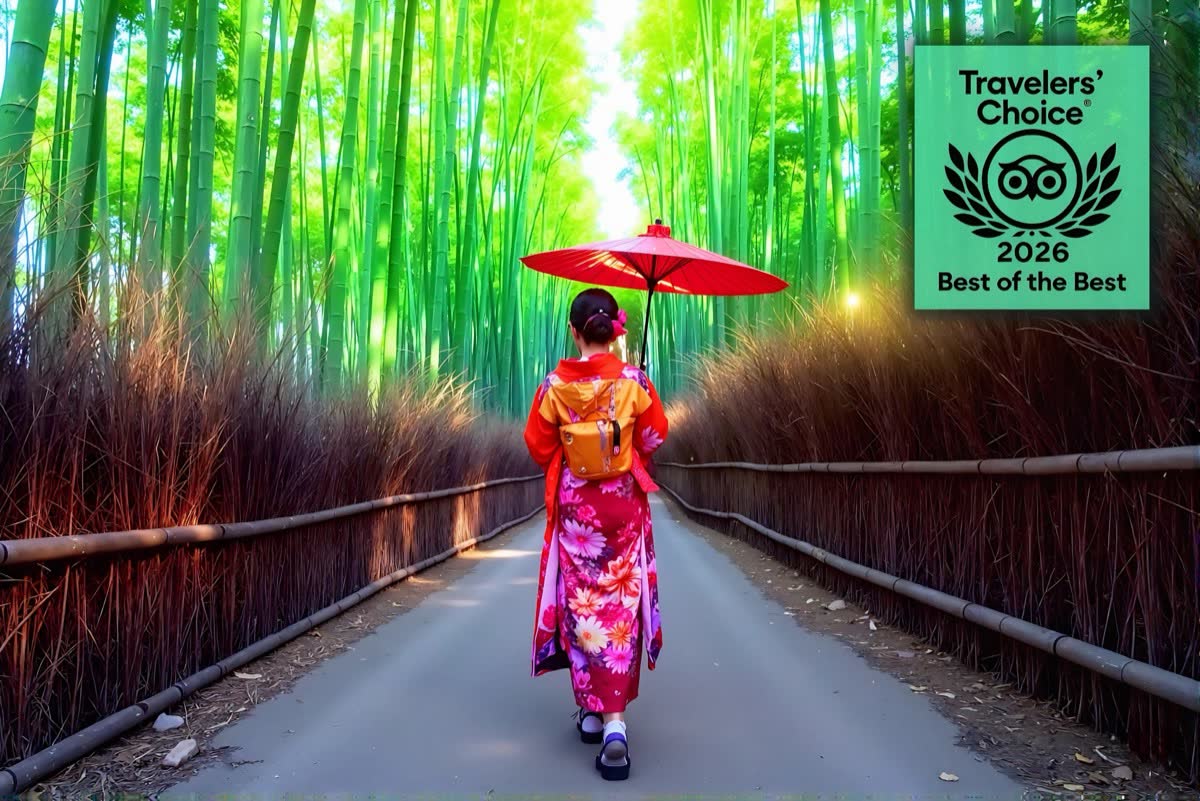
The best things to do in Arashiyama: walk the bamboo grove before the crowds arrive, visit Tenryuji's garden while it's still cool, find Jojakko-ji temple up the mossy steps that most visitors walk past, follow the Sagano path toward the unvisited northern end of the district, and come back after dark when the whole place changes character. Most visitors do the first item on that list, photograph it, and leave. The rest of Arashiyama is right there.
The bamboo grove — and when to go
The Arashiyama bamboo grove is the right place to start, and the single most important variable is timing. The path is about 400 meters long and sits on virtually every Kyoto day-trip itinerary. Between 10 AM and 4 PM in peak season, it is genuinely difficult to walk through without being shoulder to shoulder with other visitors.
Before 8 AM, it is a different place. The light comes through the stalks sideways, the sound is the bamboo rather than the crowd, and the path is manageable even in July. The grove has no closing time, which means arriving at 7 AM is completely possible if you are staying in Kyoto. That hour alone is worth adjusting your schedule for.
After 7 PM in the evening, the path empties almost completely — which is a different experience again. Dark, quiet, with the distinctive hollow knocking of bamboo in the wind that the Japanese government has officially listed as one of the country's 100 soundscapes worth preserving.
Tenryuji Temple and garden
Tenryuji is one of Kyoto's five great Zen temples and has one of the finest gardens in Japan — a 14th-century pond garden designed by the monk Muso Soseki, with the Arashiyama mountains serving as borrowed scenery behind the garden walls. The garden is accessible from early morning before the temple buildings open, which makes it one of the best early-morning stops in the district.
The main hall and the garden together take about an hour. The garden's back gate opens directly onto the bamboo grove path, making a natural route: Tenryuji garden first, then out through the bamboo. This is the sequencing that Japanify's Arashiyama Walking Tour uses, and it works better than entering the bamboo from the main tourist approach.
Jojakko-ji temple — the one most visitors miss
Five minutes on foot from the bamboo grove, up a mossy stone staircase that is easy to walk past without noticing, sits Jojakko-ji. The grounds are covered in moss and maple trees, the stone lanterns lean with age, and the five-story pagoda above the main hall looks out over a view of Arashiyama that most visitors never see.
Entry costs a few hundred yen. On a typical morning you share the grounds with almost no one. The reason visitors miss it is straightforward: it is not signposted from the main bamboo path, and the entrance staircase looks like a private approach rather than a temple entrance. Walking up anyway is one of the best decisions you can make in Arashiyama.
Okochi Sanso garden
Just past Jojakko-ji, up the same hillside, is Okochi Sanso — the private villa and garden of Denjiro Okochi, a silent-film actor who built it across 30 years. The garden combines multiple traditional styles across a large hillside property, with a viewing pavilion at the top that gives one of the best views over Arashiyama and the distant city of Kyoto. Entry includes matcha and a sweet.
The price filters out the casual crowd. What you get is a genuinely beautiful, well-maintained garden shared with very few people, and a view that rivals anything Kyoto offers.
The Oi River and Togetsukyo Bridge
The river district is underrated. Togetsukyo Bridge — the moon-crossing bridge — has been here in various forms since the 9th century. The view from the south bank toward the Arashiyama mountains with the bridge in the foreground is one of Kyoto's most iconic images. Before 8 AM or after 5 PM, when the boat rentals and souvenir stalls are closed, the riverside is quiet and genuinely beautiful.
In spring, the riverbanks are lined with cherry trees. In autumn, the mountains behind the bridge turn orange and red. Both seasons draw crowds, but early morning gives you the light and the landscape without the traffic.
The Sagano walking path toward Adashino
Most visitors to Arashiyama turn around at the bamboo grove or Tenryuji. The Sagano walking path continues north from there, through a quieter residential and temple district, eventually reaching Adashino Nenbutsuji — a small temple established to perform memorial rites for the thousands of people whose bodies were left in the Arashiyama area without burial over centuries. The grounds hold over 8,000 stone figures.
It is a 20-minute walk from the bamboo grove and is almost always uncrowded. Knowing what you are looking at when you arrive changes what the whole Arashiyama district feels like.
Arashiyama after dark
Everything above describes the daytime version of Arashiyama. After 7 PM, when the day-trippers have left for Osaka and the souvenir stalls have closed, the district has a completely different quality. The lantern-lit backstreets, the dark bamboo path, the sound of the river — it is quieter and stranger than anything the daytime visit prepares you for.
Japanify's Kyoto Ghost Tour (2.5–3 hours, max 12 guests) is built around this version of Arashiyama. The tour covers the ghost stories and yokai folklore connected to specific locations — the bamboo forest disorientation legend, the history of Adashino's unburied dead, the haunted reputation of the river district — and uses the nighttime atmosphere to make the stories land differently than they would in daylight.
How to sequence a day in Arashiyama
7:00 AM — bamboo grove (before the crowd). 8:30 AM — Tenryuji garden. 9:30 AM — up the mossy steps to Jojakko-ji and Okochi Sanso. 11:30 AM — back down to the river for lunch. Afternoon — Sagano walking path toward Adashino. Evening — return for the Ghost Tour if you have the time.
FAQ
What are the best things to do in Arashiyama?
The bamboo grove before 8 AM, Tenryuji garden, Jojakko-ji temple (usually missed, worth the extra five minutes), the Oi River at dawn or dusk, the Sagano walking path north toward Adashino Nenbutsuji, and Arashiyama after dark on the Ghost Tour.
How much time do you need in Arashiyama?
Half a day for the main sights. A full day to add Jojakko-ji, Okochi Sanso, and the Sagano path. Japanify's Arashiyama Walking Tour covers the district in 5 to 5.5 hours with a local guide.
Is Arashiyama worth visiting?
Yes — it is one of the best districts in Kyoto. The problem is timing and crowds, not the place. Early morning or evening visits, or a guided tour that uses quieter routes, produce a completely different experience from midday in peak season.
What is the best time to visit Arashiyama?
Before 8 AM for the bamboo grove in good light. After 7 PM for the evening atmosphere. November for autumn foliage. Late March to early April for cherry blossoms along the river. Midday in summer is the worst time by far.