
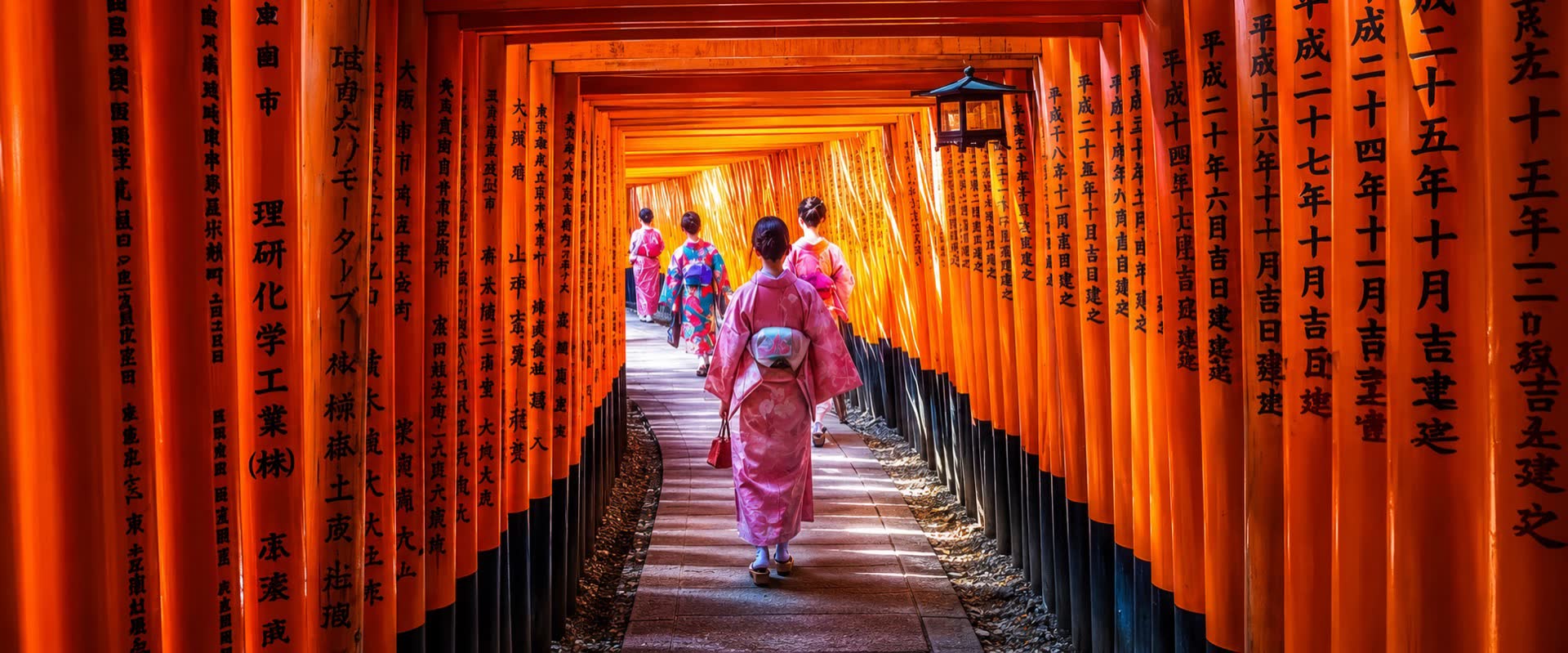
The best things to do in Kyoto in 2026: walk the Arashiyama bamboo grove before 9 a.m., climb through the red torii gates of Fushimi Inari, slow down along the Philosopher's Path and Nanzenji's Zen gardens, and after dark, trade temples for ghost stories in Arashiyama's lantern-lit backstreets.
Kyoto rewards sequencing more than box-ticking. The city's famous sights are genuinely worth seeing — the problem is that everyone sees them at the same hour, from the same angle, in a crowd. A local's Kyoto day runs on a different clock.
Morning: Arashiyama before the buses arrive
The bamboo grove is at its best between 7 and 9 a.m., when the light comes through sideways and the only sound is the stalks knocking in the wind — a sound officially listed among Japan's "100 Soundscapes." Pair it with Tenryuji Temple's gardens and the river district while the day is still cool. This is exactly the route of our Arashiyama Walking Tour (5–5.5 hours, max 12 guests), which has been Japanify's flagship for three years and carries 1,500+ five-star reviews.
The one-day combination for first-timers
If you have a single full day, combine Kyoto's two icons: Fushimi Inari's 10,000 vermilion torii gates in the morning, then Arashiyama's bamboo, temples, and Monkey Park after lunch. Doing both independently means two train transfers and a lot of guesswork; our Fushimi Inari + Arashiyama Combo Tour (6–6.5 hours) threads them together with entrance fees included and a guide who knows which trails empty out.
Afternoon: the quiet Kyoto most visitors miss
East of the city center, Nanzenji's massive sanmon gate, the Meiji-era brick aqueduct, and the Philosopher's Path form Kyoto's calmest walking territory. The Nanzenji Zen Tour (3–3.5 hours) is the slowest-paced walk we offer — built for travelers who want to actually sit in a garden rather than photograph it in passing.
Evening: Kyoto after dark is a different city
When the day-trippers leave for Osaka and Tokyo, Kyoto's older neighborhoods get quiet, lantern-lit, and honestly a little eerie. Our after-dark Kyoto Ghost Tour (2.5–3 hours) walks haunted Arashiyama backstreets and ends with a solo walk through the bamboo forest at night — consistently described in reviews as the most memorable thing guests did in Japan. Prefer history to hauntings? The Cursed History & Yokai Legends walk covers the plague years, samurai violence, and folklore the daytime guidebooks skip.
What to skip
Kiyomizu-dera at midday (shoulder-to-shoulder), the Gion “geisha-spotting” crowds (uncomfortable for everyone, especially the geiko), and bus day-passes for itineraries that are really train itineraries. Kyoto punishes cramming; three sights done well beat seven done badly.
FAQ
How many days do you need in Kyoto?
Three full days is the sweet spot: one for Fushimi Inari and Arashiyama, one for the eastern temples (Nanzenji, Philosopher's Path, Higashiyama), and one unhurried day for markets, gardens, and an evening walk. With two days, combine the icons in one guided day and keep the second slow.
Is Kyoto walkable, or do I need transport?
Individual districts are very walkable — Arashiyama, Higashiyama, and the Philosopher's Path are best on foot — but the districts themselves are spread out. Trains beat buses for crossing the city: the JR Sagano Line reaches Arashiyama and the JR Nara Line reaches Fushimi Inari in under 15 minutes from Kyoto Station.
Is a guided tour worth it in Kyoto?
If you only have a day or two, yes — the difference between Kyoto at 8 a.m. on a local's route and Kyoto at noon on the tourist flow is enormous. Small groups (Japanify caps every tour at 12 guests) preserve the quiet that makes the city worth visiting, and English-speaking local guides turn temples from scenery into stories.