
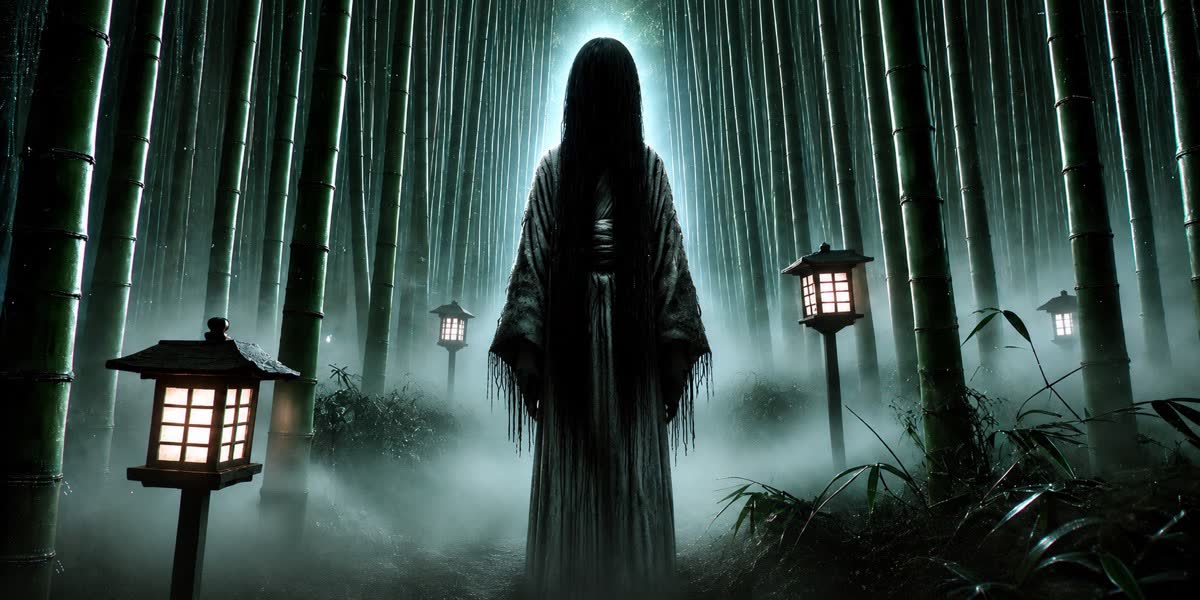
Kyoto's ghost stories are not the product of tourist imagination. The city has been generating and preserving supernatural narratives since the Heian period — since before most of Europe's cathedral cities were built. The most famous ones are tied to real places, real historical figures, and real social conditions that made certain kinds of stories necessary. Here are the ones that have lasted.
Lady Rokujō and the living spirit (The Tale of Genji, 11th century)
The earliest and most psychologically sophisticated ghost story connected to Kyoto comes from The Tale of Genji, written by court lady Murasaki Shikibu around the year 1000. Lady Rokujō is a proud noblewoman, a former lover of the protagonist Genji, who becomes consumed by jealous resentment when Genji takes other women. Her ikisudama — her living spirit, a concept unique to Japanese supernatural tradition — detaches from her body while she sleeps and attacks her rivals, causing illness and death.
Lady Rokujō is not conventionally evil. She is aware, horrified, and unable to control what her jealousy does in the night. The story is a thousand years old and still reads as genuinely unsettling, in part because it externalizes an internal emotional state and treats it as capable of real harm.
The concept of ikisudama — the idea that strong emotion can send a living person's spirit out to harm others — is specific to Japanese supernatural tradition and appears in Kyoto's folklore in other forms as well.
The spirit of Emperor Sutoku (12th century)
Emperor Sutoku was stripped of power after a succession dispute in 1156 and exiled to Shikoku — the first such exile of a Japanese emperor in centuries. He spent his remaining years copying Buddhist sutras in his own blood. The court refused to accept the offering. He bit open his finger and wrote a curse across the manuscripts before dying in 1164.
The civil wars, famines, and plagues that followed were attributed to his onryō — his vengeful ghost. He is counted among Japan's three most powerful vengeful spirits. His spirit was eventually enshrined at Shiramine Shrine in Kyoto in an attempt to appease it. The shrine, in the Kamigyō ward of the city, still stands and still carries that history.
The Heike ghosts of Arashiyama
The Genpei War (1180–1185) ended with the destruction of the Taira (Heike) clan — once the most powerful family in Japan — at the naval battle of Dan-no-ura. The surviving Taira fled west and were hunted down. Kyoto, which had been the center of Taira power, became a city haunted by their absence.
The tradition of Heike ghosts appearing near Arashiyama and along the Oi River is grounded in the area's historical significance as a place where the aristocratic culture that the Taira represented had once flourished. The biwa hoshi — blind Buddhist monks who traveled Japan reciting The Tale of the Heike — were believed to be particularly vulnerable to Heike ghosts, who sought audiences for the story of their own destruction. The practice of tattooing the sutras on the monks' bodies to protect them from the dead is one of Japanese folklore's most striking images.
The plague spirits and the Gion Festival
Kyoto suffered catastrophic epidemics in 869 CE and repeatedly through subsequent centuries. The folk understanding attributed disease outbreaks to goryō — vengeful spirits of the politically powerful dead, returning to punish the living for the injustices done to them.
The Gion Festival, held every July, began as a ritual to drive these plague spirits out of the city. The enormous floats (yamaboko) that parade through central Kyoto were originally conceived as spirit vessels — elaborate enough and sufficiently honored to attract the goryō, then carry them away. The festival has been held continuously for over 1,100 years. Its origins are not celebratory but protective: a city terrified of its own dead, doing everything it could to manage them.
The unburied dead of Adashino
For much of Kyoto's history, proper Buddhist burial was expensive and unavailable to the poor, travelers who died on the road, and those without family to perform the necessary rites. The Arashiyama district — specifically the area around what is now Adashino Nenbutsuji temple — became an informal disposal ground for these bodies.
The Buddhist monks Kukai and Honen held memorial rites at the site to address the accumulated spiritual debt of the unburied dead. The stone figures throughout the temple grounds mark these remains. The tradition of lighting candles for the dead at this temple twice a year continues today. The ghost stories associated with the Arashiyama area are inseparable from this history — the landscape carries the weight of thousands of unacknowledged deaths.
Experiencing these stories in person
Japanify's Kyoto Ghost Tour walks the Arashiyama district after dark, covering the ghost stories and yokai folklore connected to specific locations along the route — the bamboo forest, the river paths, the district's historically dark corners. The Cursed History and Yokai Legends Tour covers the deeper historical record: plague spirits, political curses, and the events that gave Kyoto its enduring supernatural reputation. Both are small-group, English-language, and run year-round from Arashiyama.
FAQ
What is the most famous ghost story in Kyoto?
Lady Rokujō from The Tale of Genji — an 11th-century story of jealous obsession whose spirit attacks rivals in the night — is the oldest and most psychologically complex. For historical legends, the vengeful spirit of Emperor Sutoku is the most significant: a 12th-century emperor whose curse was blamed for decades of civil war.
Are there haunted places in Kyoto connected to famous ghost stories?
Yes. Shiramine Shrine enshrines Emperor Sutoku's spirit. Adashino Nenbutsuji in Arashiyama connects to the tradition of the unburied dead. Japanify's ghost tours visit the Arashiyama district after dark with context on the stories behind each location.
What is a yurei in Japanese ghost stories?
A yūrei is the ghost of a dead person, bound to the living world by an unresolved strong emotion — jealousy, grief, or revenge. They appear in white burial kimonos, are tied to specific places or people, and can only be freed by resolving what keeps them.
Can you visit haunted places in Kyoto at night?
Yes. Most of Kyoto's historically significant haunted locations are publicly accessible. Japanify's Kyoto Ghost Tour runs year-round in small groups with English guides through Arashiyama after dark.